Mastering Pressure and Flow Control: A Guide to PRV, Ultrasonic, and Electromagnetic Flowmeter Integration

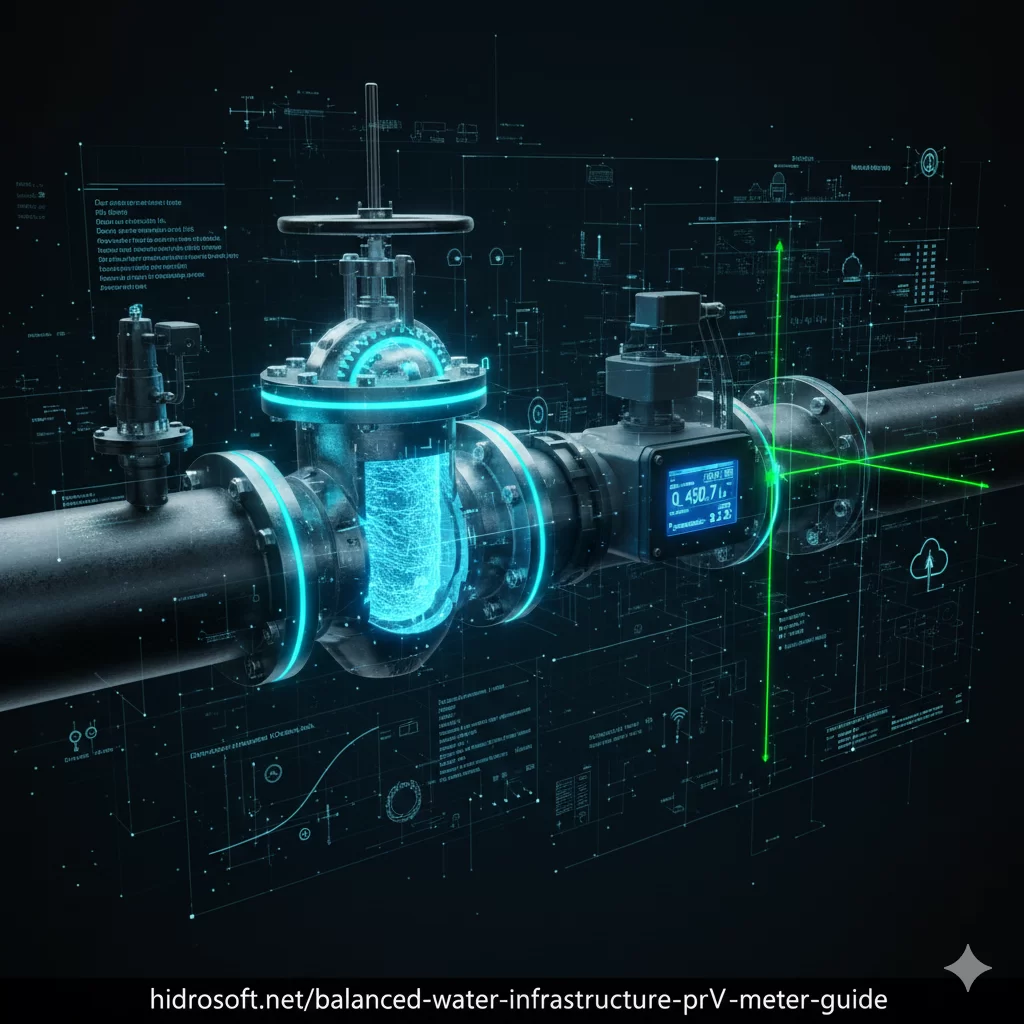
In the era of Smart water Networks, infrastructure is no longer just about pipes and valves; it is about precision instrumentation and automated feedback loops. To achieve a balanced, resilient system that minimizes bursts and maximizes revenue, utilities must master the strategic placement of Pressure Reducing Valves (PRVs), Ultrasonic Flow Meters, and Electromagnetic Flow Meters (Magmeters).
- 1. The Role of the Pressure Reducing Valve (PRV) in System Stability
- Strategic Placement of PRVs
- 2. Measuring the Flow: Electromagnetic vs. Ultrasonic Technology
- A. Electromagnetic Flow Meters (Magmeters): The Gold Standard
- B. Ultrasonic Flow Meters: The Versatile Alternative
- 3. Creating a Balanced System: The PRV-Meter Synergy
- Step 1: Establishing the Baseline (Night Flow Analysis)
- Step 2: Flow-Modulated Pressure Management
- 4. Technical Installation Standards: European vs. North American Practices
- 5. Maintenance and Digital Twins: The 2026 Perspective
- Conclusion: Why This Integration Matters
For water authorities across Europe and North America, these components form the backbone of District Metered Areas (DMAs). Here is how to integrate them for a truly balanced infrastructure.
1. The Role of the Pressure Reducing Valve (PRV) in System Stability
A PRV is not just a safety device; it is a dynamic management tool. In most urban networks, pressure fluctuates based on demand. High pressure during low-demand periods (nighttime) is the leading cause of background leakages and pipe bursts.
Strategic Placement of PRVs
-
Topographical Transitions: PRVs should be placed at points where the network moves from high elevation to low elevation to prevent excessive static pressure.
-
DMA Entry Points: Each District Metered Area must have a PRV at its primary inlet to ensure the downstream zone operates at a constant, optimized pressure.
-
Critical Node Management: Modern PRVs should be linked to a “critical node” (the point in the system with the lowest pressure). By monitoring the critical node via IoT sensors, the PRV can adjust the inlet pressure in real-time.
2. Measuring the Flow: Electromagnetic vs. Ultrasonic Technology
To manage what you cannot measure is impossible. However, choosing between Electromagnetic and Ultrasonic meters depends on the specific infrastructure constraints.
A. Electromagnetic Flow Meters (Magmeters): The Gold Standard
Magmeters operate based on Faraday’s Law of Induction. They are the preferred choice for permanent installations in North American municipal projects.
-
Best For: Large diameter mains and treatment plant inlets.
-
Installation Requirement: They require a full pipe and conductive fluid.
-
Precision: Extremely high accuracy (±0.2% to 0.5%) with no moving parts, meaning minimal maintenance over a 20-year lifecycle.
B. Ultrasonic Flow Meters: The Versatile Alternative
Ultrasonic meters use the Transit-Time principle. They have gained massive traction in Europe for their non-invasive nature.
-
Best For: Retrofitting existing infrastructure where cutting the pipe is not an option (Clamp-on models).
-
Installation Requirement: Requires a long straight run of pipe to avoid turbulence (typically 10D upstream and 5D downstream).
-
Advantage: They can measure bi-directional flow, which is crucial for complex, looped networks.
3. Creating a Balanced System: The PRV-Meter Synergy
A balanced system is achieved when the PRV and the Flow Meters “talk” to each other through a SCADA or Edge Controller.
Step 1: Establishing the Baseline (Night Flow Analysis)
By placing an Ultrasonic or Magmeter immediately downstream of a PRV, utilities can perform Minimum Night Flow (MNF) analysis. If the flow remains high when demand should be near zero, the system identifies a leak.
Step 2: Flow-Modulated Pressure Management
Instead of a fixed outlet pressure, the PRV can be programmed to respond to flow data:
-
High Demand: The meter detects high flow; the PRV opens further to maintain pressure.
-
Low Demand: The meter detects low flow; the PRV reduces pressure to protect the pipes.
The Optimization Formula: P_optimized = P_min + (Q_actual / Q_max)^2 * Delta_P_loss
-
P_optimized: The target pressure to be set by the PRV.
-
P_min: The minimum pressure required at the furthest customer point.
-
Q_actual: The real-time flow rate captured by your Magmeter or Ultrasonic sensor.
-
Q_max: The maximum design flow for the specific zone.
-
Delta_P_loss: The calculated pressure drop at maximum flow.
By implementing this logic into your SCADA system, the PRV will “breathe” with the city—opening up during morning peaks and closing down during the night to protect the pipes.
4. Technical Installation Standards: European vs. North American Practices
To ensure hidrosoft.net provides global value, we must highlight the differences in installation standards:
| Requirement | European Standard (CEN) | North American Standard (AWWA) |
| Meter Chambers | Often compact, prioritizing flood-proof IP68 ratings. | Larger vaults, focusing on ease of access and safety. |
| Communication | High reliance on NB-IoT and LoRaWAN. | Heavy use of Cellular (LTE-M) and Radio Telemetry. |
| PRV Pilots | Preference for electronic “Smart” pilots for remote tuning. | Historically hydraulic pilots, transitioning to digital. |
5. Maintenance and Digital Twins: The 2026 Perspective
In 2026, the physical installation is only half the battle. Every PRV and Meter should have a Digital Twin representation.
-
Calibration Alerts: If the Magmeter and the PRV’s internal pressure sensors show conflicting data, the AI at hidrosoft.net can trigger a maintenance alert before a burst occurs.
-
Transient Analysis: High-speed pressure sensors installed near PRVs can detect “water Hammer” events caused by rapid valve closures elsewhere in the network.
Conclusion: Why This Integration Matters
Integrating PRVs with advanced flow metering is the most cost-effective way to extend the life of water infrastructure. It reduces energy costs for pumping, minimizes water loss, and provides the data necessary for long-term capital planning.
At hidrosoft.net, we specialize in the software layer that unites these physical components. A balanced system is not a static achievement; it is a continuous digital process of measurement, analysis, and control.