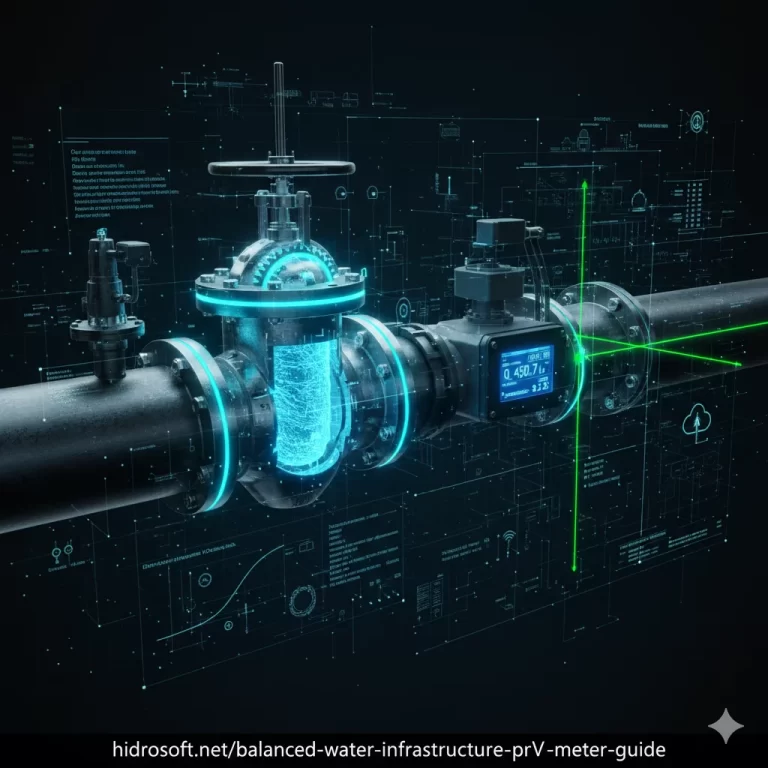
Comparative Analysis of Static Flow Metering Technologies: Ultrasonic vs. Electromagnetic for Municipal Infrastructure

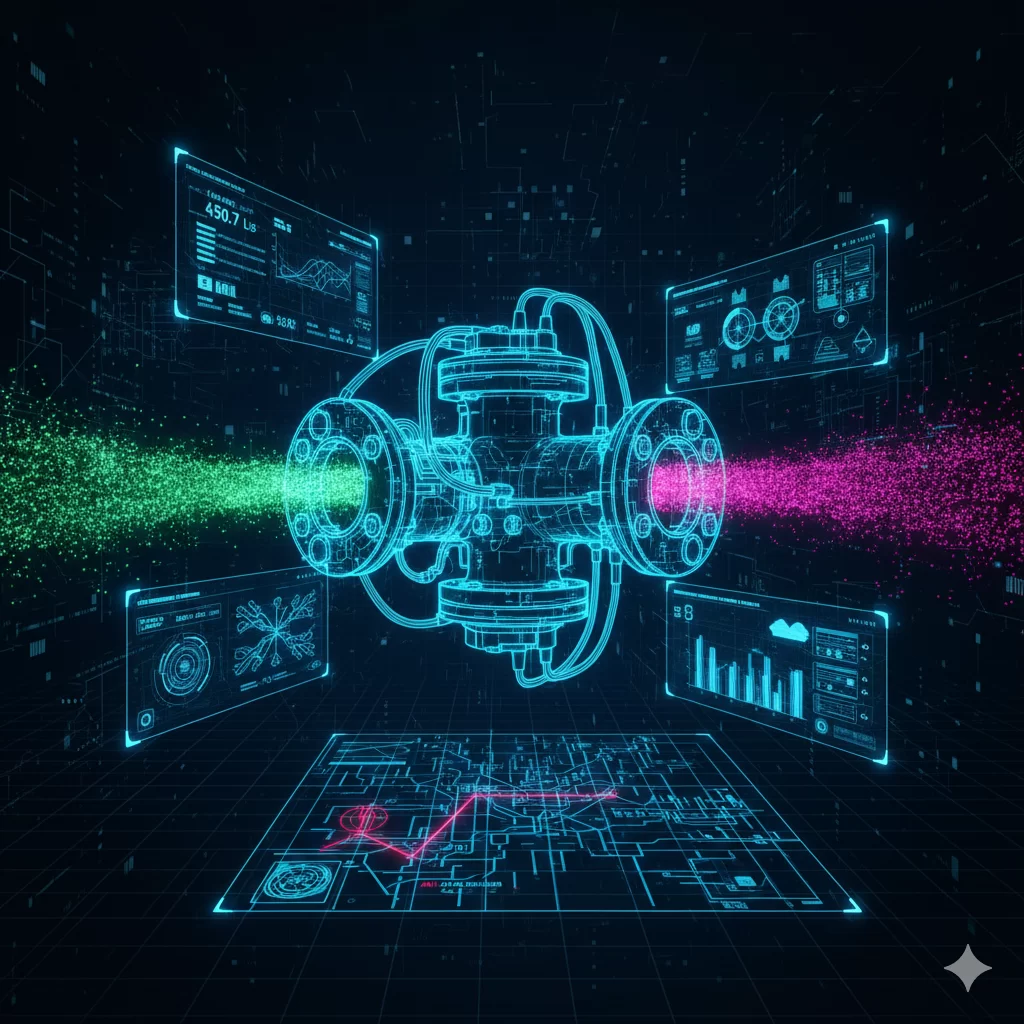
In the 2026 water utility landscape, the transition from mechanical to static metering is driven by the need for long-term data stability and “Zero-Maintenance” operational models. As infrastructure across the European Union and North America faces unprecedented stress from climate variability, the precision of flow data has become the cornerstone of District Metered Area (DMA) integrity.
This technical briefing evaluates the two dominant static technologies—Electromagnetic (Magmeter) and Ultrasonic—focusing on their integration into modern Smart water networks.
1. Electromagnetic Flow Meters: Principles and Industrial Application
Electromagnetic flow meters operate on Faraday’s Law of Induction, where the conductor is the water itself. As water flows through a magnetic field generated by the meter’s coils, a voltage is induced that is directly proportional to the flow velocity.
-
Measurement Integrity: Magmeters offer the highest repeatable accuracy in the industry, typically reaching +/- 0.2% of the flow rate.
-
Design Resilience: Featuring a completely unobstructed flow path with no moving parts, these meters eliminate pressure drop and are immune to mechanical wear.
-
Infrastructure Requirements: Implementation requires a conductive fluid and a consistently full pipe profile to maintain the electromagnetic circuit.
-
Longevity: In North American municipal standards, Magmeters are preferred for buried service due to their 20-year operational lifecycle without recalibration.
2. Ultrasonic Flow Meters: Transit-Time Dynamics and Versatility
Ultrasonic meters utilize the Transit-Time differential method, sending acoustic signals diagonally across the pipe. The difference in time between the upstream and downstream signals allows the device to calculate the precise velocity of the fluid.
-
Non-Invasive Implementation: The “Clamp-on” variant of Ultrasonic technology allows for high-precision measurement without de-pressurizing the main or modifying existing pipework.
-
Bi-Directional Capability: Unlike many traditional systems, Ultrasonic sensors excel at measuring multi-directional flows, which is critical for complex European “looped” network configurations.
-
Acoustic Challenges: The presence of entrained air or high turbidity (solids) can scatter the acoustic signal, requiring advanced signal processing found in 2026-gen sensors.
-
Dynamic Range: Ultrasonic meters often feature a superior “turn-down ratio,” allowing them to detect extremely low night flows that are vital for early-stage leak detection.
3. Strategic Selection Matrix for 2026 Utilities
Choosing between these technologies is a matter of Application Environment rather than just cost.
| Parameter | Electromagnetic (Magmeter) | Ultrasonic (Transit-Time) |
| Ideal Use Case | Billing, Revenue, and Plant Inlets | Leak Detection and Retrofitting |
| Straight-Pipe Requirement | Moderate (typically 3D-5D) | High (typically 10D-15D) |
| Maintenance Profile | Zero-Maintenance (Solid State) | Periodic Sensor Cleaning (if invasive) |
| Digital Integration | 4-20mA, Modbus, Cellular | NB-IoT, LoRaWAN, High-Speed Acoustic |
4. Integration with Digital Twins and SCADA
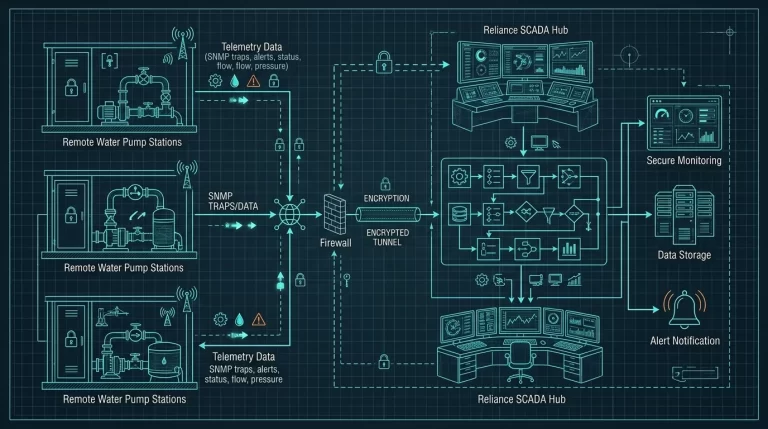
The value of these meters at hidrosoft.net is realized through their integration into Digital Twin architectures. In 2026, a meter is no longer a standalone tool; it is a data node in a predictive simulation.
-
Real-Time Calibration: By comparing Magmeter data with hydraulic models (e.g., WaterGems or InfoWater Pro), utilities can automatically identify “Ghost Leaks” or sensor drift.
-
Transient Detection: High-frequency Ultrasonic sampling allows for the detection of water hammer and pressure surges that cause catastrophic pipe failure.
Conclusion: Data Accuracy as a Strategic Asset
As water scarcity drives regulatory changes in the EU and North America, the “accuracy gap” in traditional mechanical meters is no longer acceptable. Whether a utility standardizes on the Electromagnetic stability or the Ultrasonic versatility, the goal remains the same: transforming flow data into operational intelligence.
At hidrosoft.net, we provide the analytical framework to ensure that your measurement hardware becomes a pillar of your digital transformation.