Top 10 AI-Powered SCADA Features for Reducing Energy Costs in Water Utilities

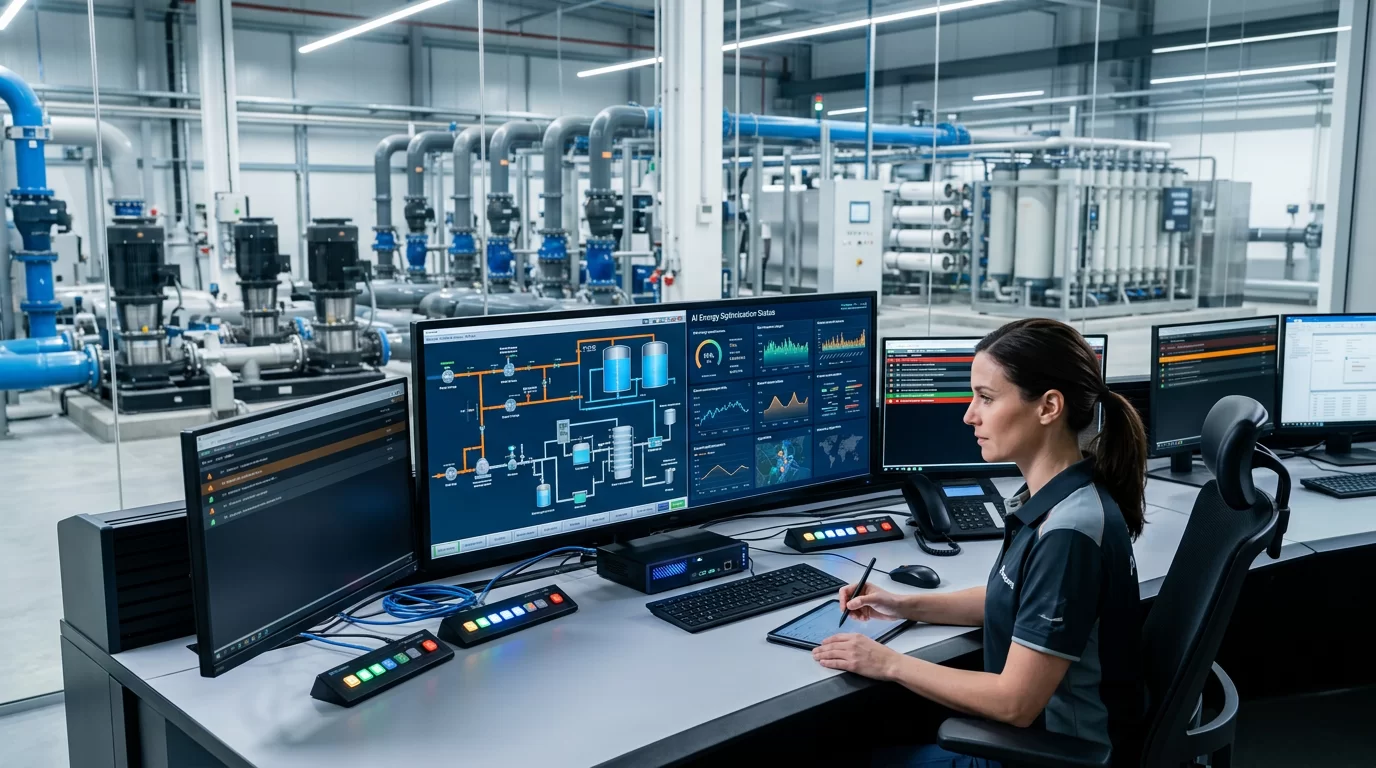
Discover how AI-powered SCADA features optimize water utility operations and slash energy costs through intelligent Automation and predictive analytics.
- The New Era of water Infrastructure: AI-Driven Efficiency
- 1. Predictive Pump Scheduling
- 2. Real-Time Leak Detection and Localization
- 3. Dynamic Pressure Management
- 4. Anomaly Detection for Motor Health
- 5. Machine Learning-Based Demand Forecasting
- 6. Automated VFD Tuning
- 7. Integration with Dynamic Energy Tariffs
- 8. Digital Twin Simulations
- 9. Intelligent Aeration Control in Wastewater
- 10. Edge AI for Latency-Free Control
- Comparison: Traditional vs. AI-Enhanced SCADA
- Conclusion
The New Era of water Infrastructure: AI-Driven Efficiency
For decades, Supervisory Control and Data Acquisition (SCADA) systems have been the backbone of water utility operations. However, traditional SCADA systems are often reactive, relying on fixed setpoints and manual overrides. As energy prices fluctuate and sustainability mandates tighten, water utilities are turning to Artificial Intelligence (AI) and Machine Learning (ML) to transform their infrastructure into intelligent, self-optimizing networks. For software engineers and SCADA developers, this shift represents a move from simple telemetry to complex algorithmic control.
Integrating AI into SCADA doesn’t just improve visibility; it directly impacts the bottom line. Energy consumption—primarily for pumping and aeration—is typically the largest controllable expense for water utilities. Here are the top 10 AI-powered SCADA features currently revolutionizing energy management in the water sector.
1. Predictive Pump Scheduling
Pumping accounts for nearly 80% of a water utility’s energy usage. AI-powered SCADA systems utilize Reinforcement Learning (RL) to analyze historical demand patterns, weather forecasts, and electricity spot prices. Instead of static schedules, the system generates dynamic pumping plans that shift heavy loads to off-peak hours while maintaining reservoir levels. By optimizing pump start/stop cycles, utilities can reduce energy spikes and mechanical wear.
2. Real-Time Leak Detection and Localization
Non-revenue water (NRW) is a massive energy drain; pumping water that never reaches the customer is pure waste. AI algorithms analyze flow and pressure data from IoT sensors to identify anomalies that signify a leak. Using Gradient Boosting Machines (GBM), the SCADA system can triangulate the location of a burst or slow leak, allowing for rapid repair and preventing the energy loss associated with increased friction and head loss.
3. Dynamic Pressure Management
Excessive pressure in the distribution network increases the frequency of pipe bursts and leads to higher energy consumption. AI-enhanced SCADA systems implement Adaptive PID Control. By processing real-time hydraulic data, the AI adjusts Pressure Reducing Valves (PRVs) and Variable Frequency Drives (VFDs) to maintain the minimum required pressure for all nodes, significantly reducing the kilowatt-hours required per gallon delivered.
4. Anomaly Detection for Motor Health
Inefficient motors consume more power to achieve the same output. AI modules within SCADA systems use Fast Fourier Transform (FFT) and vibration analysis to monitor motor health. By detecting early signs of bearing failure or winding insulation breakdown, the system alerts engineers to perform maintenance before a total failure occurs, ensuring that pumps always operate at their peak efficiency curve.
5. Machine Learning-Based Demand Forecasting
Accurate demand forecasting is the foundation of energy optimization. Modern SCADA systems leverage Long Short-Term Memory (LSTM) networks—a type of Recurrent Neural Network—to predict water demand with high precision. These models account for seasonal variations, holidays, and even local events, allowing the system to prepare the network without over-pumping or relying on energy-intensive emergency overrides.
6. Automated VFD Tuning
While most modern pumps use Variable Frequency Drives (VFDs), they are often poorly tuned. AI can continuously analyze the system’s Best Efficiency Point (BEP). By automatically adjusting the frequency of the VFD in response to real-time head and flow changes, the AI ensures the pump is always operating in its most energy-efficient zone, avoiding the “hunting” effect common in manual tuning.
7. Integration with Dynamic Energy Tariffs
For developers, building APIs that connect SCADA systems to energy market data is crucial. AI-powered SCADA can ingest real-time pricing feeds from the grid. When prices spike, the AI automatically throttles non-essential processes or switches to backup energy storage (like batteries or gravity-fed reservoirs), effectively arbitrage-ing energy costs in real-time.
8. Digital Twin Simulations
A Digital Twin is a virtual representation of the physical water network. AI uses SCADA data to run “what-if” scenarios in the twin environment. Engineers can test new energy-saving configurations—such as changing the sequence of a pump station—without risking the actual infrastructure. The AI identifies the configuration with the lowest energy footprint before deployment.
9. Intelligent Aeration Control in Wastewater
In wastewater treatment, aeration can consume up to 60% of a plant’s energy. AI-powered SCADA systems use sensors for Dissolved Oxygen (DO), Ammonia, and Nitrate to control blowers. By using Fuzzy Logic or ML models to predict oxygen demand based on influent characteristics, the system provides only the air necessary, preventing the massive energy waste of over-aeration.
10. Edge AI for Latency-Free Control
While cloud computing is powerful, energy-critical decisions often need to happen at the “edge.” Modern SCADA architectures incorporate AI models directly into edge gateways or high-performance PLCs. This allows for instantaneous response to hydraulic transients or power fluctuations, maintaining system stability and energy efficiency even if the primary network connection is lost.
Comparison: Traditional vs. AI-Enhanced SCADA
The following table illustrates the technological leap between standard SCADA implementations and those augmented with Artificial Intelligence.
| Feature | Traditional SCADA | AI-Powered SCADA | Primary Energy Benefit |
|---|---|---|---|
| Pump Logic | Fixed setpoints/timers | Predictive Reinforcement Learning | 15-25% reduction via peak shifting |
| Pressure Control | Static PRV settings | Real-time hydraulic optimization | Lowered pumping head requirements |
| Leak Management | Manual acoustic reporting | Automated transient analysis | Reduced non-revenue water energy loss |
| Maintenance | Reactive or scheduled | Predictive (condition-based) | Optimal equipment efficiency (BEP) |
| Data Processing | Historical logging only | Real-time pattern recognition | Immediate response to inefficiencies |
Conclusion
The integration of AI into SCADA is no longer a luxury for water utilities; it is a necessity for economic and environmental sustainability. For software engineers and developers, the challenge lies in bridging the gap between Operational Technology (OT) and Information Technology (IT). By leveraging protocols like OPC-UA and MQTT to feed AI models, we can build a more resilient, responsive, and energy-efficient water infrastructure for the future.