The Ultimate Guide: Modernizing Legacy SCADA with IIoT to Future-Proof Water Infrastructure Operations

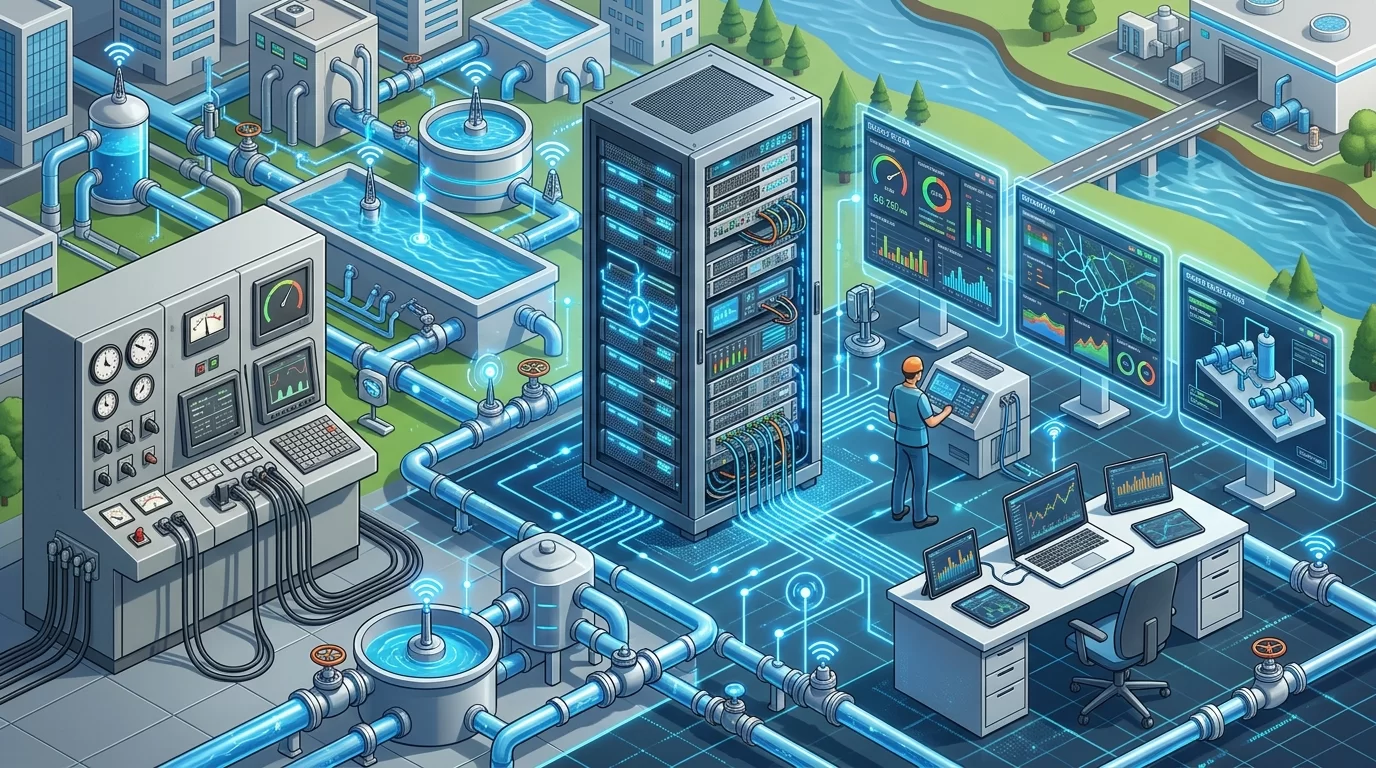
This comprehensive guide explores the technical transition from legacy monolithic SCADA to agile IIoT-enabled architectures, providing a roadmap for future-proofing water utility infrastructure through edge computing and unified data namespaces.
- The Impending Obsolescence of Monolithic SCADA
- The Technical Gap: Legacy vs. Modern IIoT-SCADA
- Step-by-Step Implementation: Bridging the Gap
- 1. Protocol Normalization via Edge Gateways
- 2. Establishing the Unified Namespace (UNS)
- 3. Practical Configuration: Modbus-to-MQTT Bridge
- Advanced Analytics and AI Readiness
- Security Considerations in the IIoT Era
- Conclusion
The Impending Obsolescence of Monolithic SCADA
For decades, Supervisory Control and Data Acquisition (SCADA) systems have served as the backbone of water and wastewater operations. However, the traditional monolithic architecture—characterized by proprietary protocols, siloed data, and expensive licensed tags—is increasingly becoming a bottleneck. As water utilities face mounting pressure from regulatory compliance, aging infrastructure, and climate-driven variability, the need to transition toward a more flexible, Industrial Internet of Things (IIoT) integrated model has never been more critical.
Modernizing legacy SCADA is not merely about replacing hardware; it is about shifting from a “polling-response” architecture to a “report-by-exception” data-centric model. This evolution allows senior SCADA engineers to unlock high-resolution data for predictive maintenance, Hydraulic Modeling, and AI-driven leak detection without compromising the deterministic control required for critical infrastructure.
The Technical Gap: Legacy vs. Modern IIoT-SCADA
Before initiating a modernization project, it is essential to understand the fundamental differences between the two paradigms. Legacy systems are often hardware-centric, whereas modern IIoT-integrated systems are software-defined and data-centric.
| Feature | Legacy SCADA (Monolithic) | Modern IIoT-SCADA (Hybrid) |
|---|---|---|
| Communication Protocol | Modbus, DNP3 (Polling) | MQTT Sparkplug B (Pub/Sub) |
| Data Structure | Flat, Unstructured Tags | Unified Namespace (UNS), Object-Oriented |
| Scalability | Vertical (Expensive Licensing) | Horizontal (Edge-to-Cloud) |
| Interoperability | Vendor Lock-in | Open Standards (OPC UA, MQTT) |
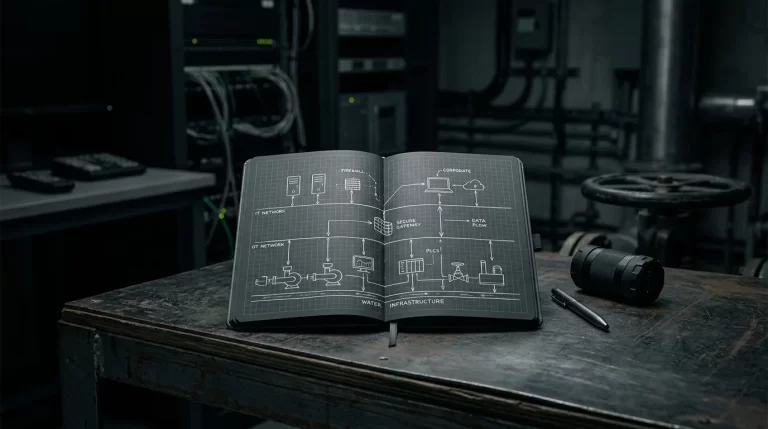
| Security | Air-gapped (Security by Obscurity) | TLS/SSL, Zero Trust, Certificate-based |
Step-by-Step Implementation: Bridging the Gap
1. Protocol Normalization via Edge Gateways
The first step in modernizing legacy infrastructure is the deployment of Edge Gateways. These devices sit physically close to the legacy PLCs (Programmable Logic Controllers) and translate legacy protocols like Modbus RTU/TCP or DNP3 into MQTT. By using the Sparkplug B specification, you ensure that the data payload is structured, timestamped, and includes necessary metadata.
2. Establishing the Unified Namespace (UNS)
The Unified Namespace is a software layer that acts as a single source of truth for all data within the utility. Instead of point-to-point connections between a pump station and a HMI, every asset publishes its state to a central broker. This allows other consumers—such as hydraulic models, AI engines, or GIS platforms—to subscribe to the data they need without impacting the primary SCADA control loop.
3. Practical Configuration: Modbus-to-MQTT Bridge
For engineers looking to prototype an edge-to-cloud bridge, Python offers a robust environment using libraries like pymodbus and paho-mqtt. Below is a simplified example of how to read a register from a legacy PLC and publish it to an IIoT broker.
import time
from pymodbus.client import ModbusTcpClient
import paho.mqtt.client as mqtt

# Configuration
PLC_IP = "192.168.1.50"
MQTT_BROKER = "10.0.0.10"
TOPIC = "spBv1.0/WaterDistrict1/DDATA/PumpStation4/FlowMeter"

# Initialize Clients
modbus_client = ModbusTcpClient(PLC_IP)
mqtt_client = mqtt.Client()

def bridge_data():
    if modbus_client.connect():
        # Read holding register 40001 (Flow Rate)
        result = modbus_client.read_holding_registers(0, 1)
        if not result.isError():
            flow_rate = result.registers[0]
            # Publish to MQTT Broker
            mqtt_client.connect(MQTT_BROKER, 1883, 60)
            mqtt_client.publish(TOPIC, payload=str(flow_rate), qos=1)
            print(f"Published Flow Rate: {flow_rate}")
        modbus_client.close()

while True:
    bridge_data()
    time.sleep(5) # Poll every 5 seconds
Advanced Analytics and AI Readiness
Once the data is flowing through a modern IIoT pipeline, the utility is positioned to leverage Artificial Intelligence. Legacy SCADA systems often lack the granularity required for training machine learning models. By implementing IIoT, engineers can capture high-frequency transients (e.g., water hammer events) that are usually missed by standard 1-minute polling cycles.
These datasets enable the development of Digital Twins, where real-time SCADA data is fed into hydraulic models (like Epanet) to simulate “what-if” scenarios, such as pipe bursts or pump failures, in a virtual environment before they occur in the physical world.
Security Considerations in the IIoT Era
Integrating IIoT into water infrastructure introduces new attack vectors. Senior engineers must move away from the “air-gap” myth. Modern security involves Defense-in-Depth. This includes implementing TLS 1.3 encryption for all data in transit, utilizing VPN tunnels for remote access, and adopting Identity and Access Management (IAM) to ensure that only authorized services can write to the control registers of the PLC.
Conclusion
Modernizing legacy SCADA with IIoT is not an overnight task; it is a strategic migration. By focusing on protocol normalization, establishing a Unified Namespace, and prioritizing security, water utilities can transform from reactive maintenance centers into proactive, data-driven organizations. The result is a future-proof infrastructure capable of meeting the challenges of the 21st century with precision and resilience.