Engineering Resilient Real-Time Load Forecasting for Water SCADA: A Deep Dive into C# and Historical Power Data Integration

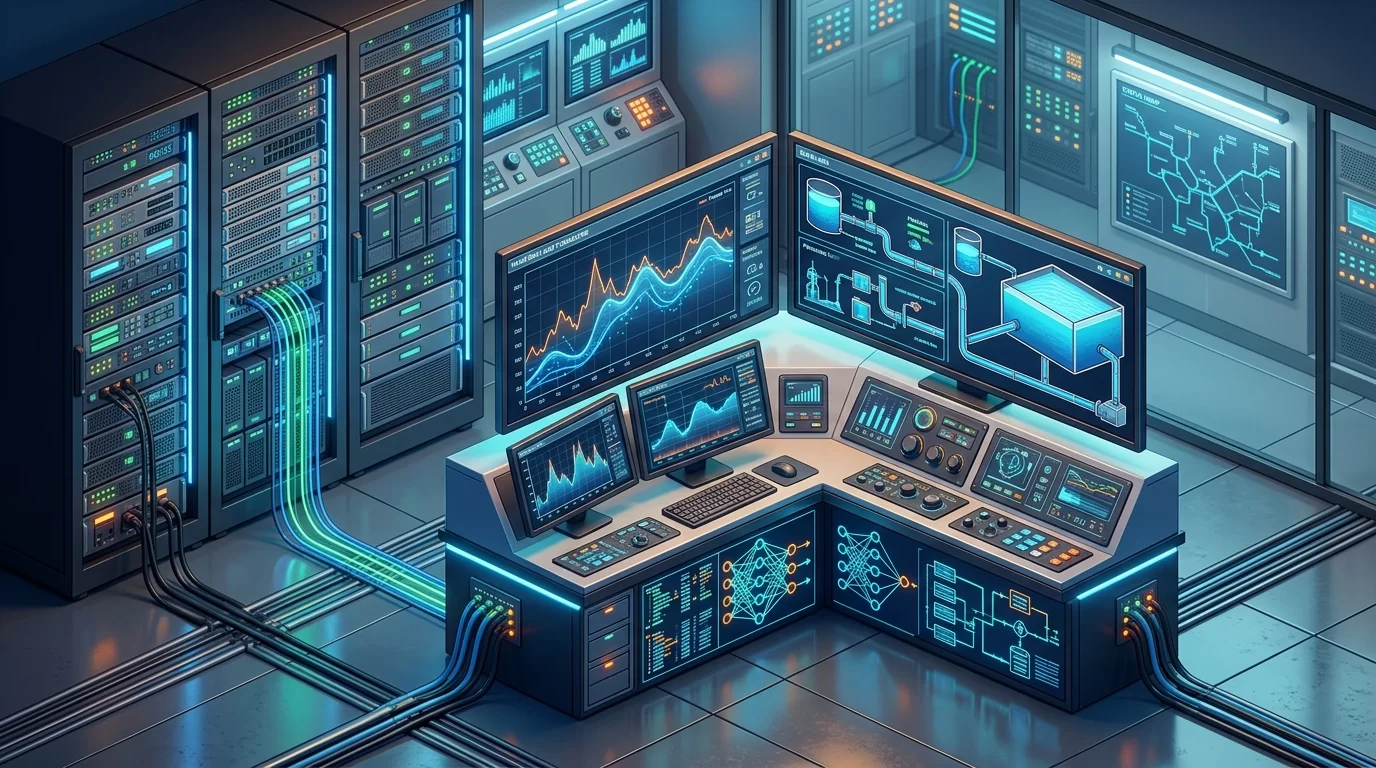
Secure your water infrastructure with resilient real-time load forecasting using C# and IEC 62443 principles to ensure operational continuity and data integrity.
- The Myth of the Air-Gapped Oracle: Why Your water SCADA is Vulnerable
- Engineering the Conduit: IEC 62443 and NIS2 Compliance
- Why C# is the Pragmatic Choice for SCADA Middleware
- The SQL Bridge: Integrating Historical Power Metrics
- Technical Comparison: Legacy vs. Resilient Forecasting
- Conclusion: The Path Forward for water Infrastructure
The Myth of the Air-Gapped Oracle: Why Your water SCADA is Vulnerable
In the world of water infrastructure management, there is a persistent and dangerous myth: that load forecasting models, because they often reside on the business network (Level 4/5 of the Purdue Model), are inherently isolated from the operational risks of the SCADA network. This “air-gap” is frequently an illusion. Modern water distribution requires tight integration between demand forecasting and pump scheduling. When you feed historical power data into your SCADA system to optimize energy costs, you are creating a conduit. If that conduit is not engineered with the rigor of IEC 62443-3-3, you aren’t just forecasting demand; you are forecasting a potential system failure.
Another common industry assumption is that high-frequency data polling is the key to accuracy. In reality, as an industrial auditor, I often see that excessive polling creates a “denial of service” condition on legacy PLCs and RTUs. Resilience in load forecasting is not about the quantity of data, but the integrity and deterministic timing of the data pipeline.
Engineering the Conduit: IEC 62443 and NIS2 Compliance
Under the European NIS2 Directive and international standards like IEC 62443, water utilities are classified as essential entities. This means that your real-time load forecasting software is no longer a “nice-to-have” utility script; it is a critical system component. Engineering resilience requires a shift from “functional programming” to “defensive industrial engineering.”
The integration of historical power data must be handled through defined zones and conduits. Your C# middleware should act as a security gateway, validating data types, ranges, and timestamps before any value is allowed to influence a control setpoint. This is the difference between a system that works in a lab and a system that survives a cyber-physical attack.
Why C# is the Pragmatic Choice for SCADA Middleware
While Python is popular for data science, C# (.NET 8+) is often superior for industrial middleware due to its strong typing, memory safety, and native integration with Windows-based Historians. In a resilient architecture, we utilize asynchronous programming to ensure that a delay in power data retrieval from an external API or SQL database does not hang the SCADA interface.
Below is a practical example of a resilient data ingestion service in C#. Note the use of defensive checks and structured logging, which are essential for IEC 62443-4-2 component compliance.
using System;
using System.Security.Cryptography;
using System.Threading.Tasks;

public class ResilientPowerDataClient
{
    private readonly string _historianConnectionString;

    public async Task<double> GetValidatedLoadForecast(DateTime targetTime)
    {
        try
        {
            // Defensive Check: Ensure we are not requesting data too far in the future
            if (targetTime > DateTime.Now.AddHours(24))
                throw new ArgumentException("Forecast horizon exceeded.");

            double rawValue = await FetchFromHistorian(targetTime);

            // Sanity Check: water demand cannot be negative
            if (rawValue < 0) return 0.0;

            return rawValue;
        }
        catch (Exception ex)
        {
            // Log to Industrial Syslog for Audit Trail
            LogToSecurityAudit("Data_Ingestion_Failure", ex.Message);
            return -1; // Signal invalid state to SCADA
        }
    }

    private async Task<double> FetchFromHistorian(DateTime time)
    {
        // Implementation for SQL/Historian connection
        return await Task.FromResult(150.5);
    }

    private void LogToSecurityAudit(string eventType, string message)
    {
        // Integration with SIEM/SOC
    }
}
The SQL Bridge: Integrating Historical Power Metrics
To build an accurate forecast, we must query historical power consumption metrics alongside hydraulic flow rates. However, direct SQL access from the SCADA HMI to the enterprise database is a major security violation. Instead, a hardened intermediary service should execute parameterized queries to pull time-series data.
A resilient SQL query for this purpose should use window functions to smooth out sensor noise, ensuring the forecast isn’t triggered by a transient power spike. For more on secure data structures, consult the Microsoft .NET Security Guidelines.
-- Secure, aggregated historical power retrieval
SELECT
    DATEADD(minute, DATEDIFF(minute, 0, Timestamp) / 15 * 15, 0) AS IntervalTime,
    AVG(PowerConsumption_kW) AS AvgLoad,
    STDEV(PowerConsumption_kW) AS LoadVariance
FROM PowerMetrics
WHERE Timestamp > DATEADD(day, -7, GETDATE())
GROUP BY DATEADD(minute, DATEDIFF(minute, 0, Timestamp) / 15 * 15, 0)
ORDER BY IntervalTime DESC;
Technical Comparison: Legacy vs. Resilient Forecasting
The following table illustrates the shift from traditional SCADA scripting to the resilient engineering required by modern standards like AWWA G430 and IEC 62443.
| Feature | Legacy SCADA Approach | Resilient (IEC 62443) Approach |
|---|---|---|
| Data Validation | None; accepts any value from the DB. | Strict range, type, and rate-of-change validation. |
| Error Handling | Script crashes or hangs the HMI. | Graceful degradation with fail-to-safe values. |
| Authentication | Hardcoded SQL credentials in scripts. | Managed Identities or Encrypted Vaults. |
| Auditability | No logging of data source changes. | Full cryptographic logging of data conduits. |
| Network Path | Direct DB connection across VLANs. | DMZ-hosted C# API with mTLS. |
Conclusion: The Path Forward for water Infrastructure
Resilience is not a feature you add to a system; it is a property that emerges from rigorous engineering. By utilizing C# for secure middleware and adhering to the zone-based requirements of IEC 62443, water infrastructure managers can leverage historical power data without introducing unacceptable risks. For further reading on industrial resilience, the IEEE Xplore Digital Library offers extensive research on SCADA integrity. The goal is clear: build a system that is not only smart enough to forecast the future but strong enough to survive it.