The Ultimate Guide: Architecting Secure IT-OT Network Convergence in Power Generation Facilities: A Data-Driven Framework for Water Infrastructure Managers

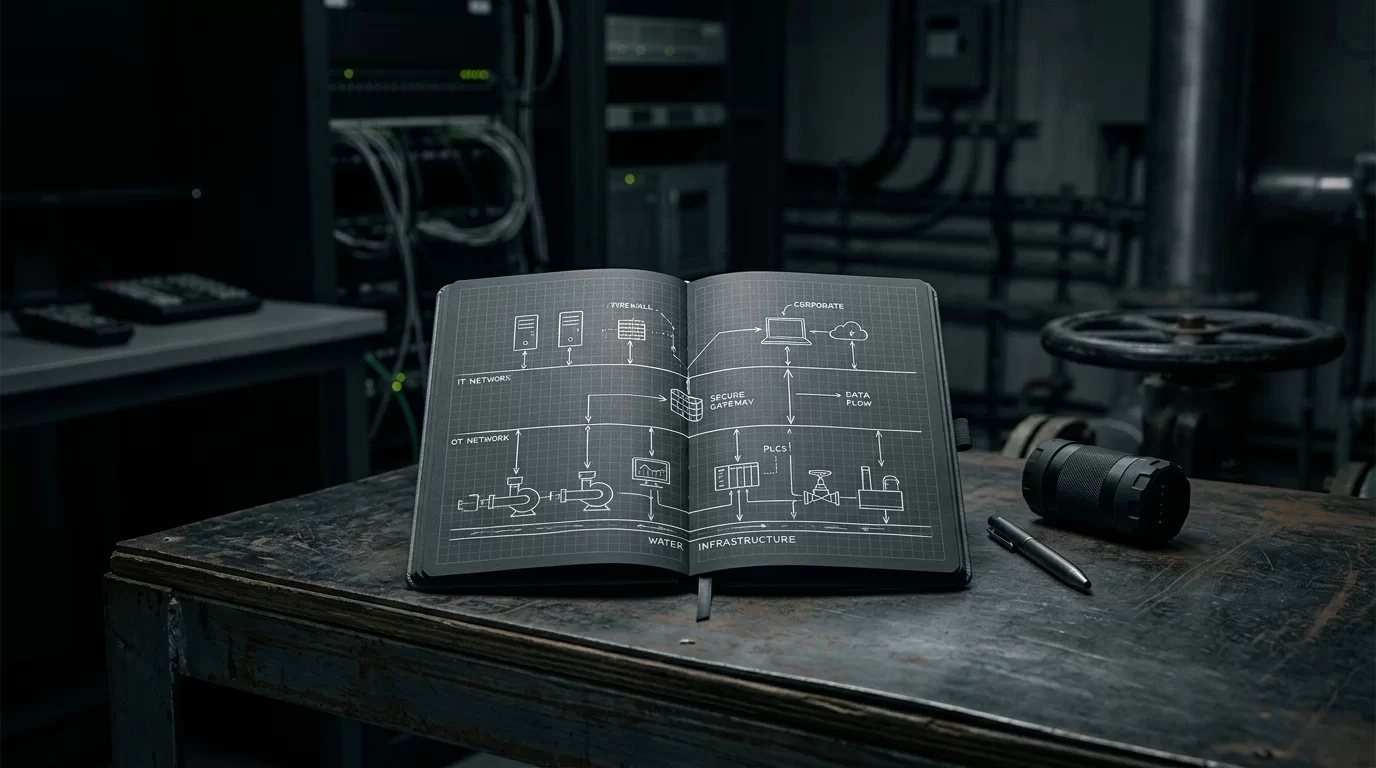
Discover the ultimate guide to architecting secure IT-OT network convergence in power generation facilities, providing water infrastructure managers with a data-driven, step-by-step troubleshooting framework for resilient SCADA operations.
- Introduction: The IT-OT Convergence Imperative
- Step 1: Conducting a Deterministic Baseline Audit of Legacy OT
- Step 2: Engineering the Industrial Demilitarized Zone (IDMZ)
- Step 3: Resolving Protocol Handshake and Latency Bottlenecks
- Step 4: Cryptographic Enforcement and Secure Data Telemetry
- Step 5: Evaluating Firewall Throughput and DPI Capabilities
- Step 6: Implementing Continuous Anomaly Detection
- Incident Response Protocol
- Conclusion
Introduction: The IT-OT Convergence Imperative
As a Senior SCADA Architect, I frequently encounter municipal water infrastructure managers tasked with overseeing complex, co-located power generation facilities—such as hydroelectric dams, pumped-storage hydro, or biogas cogeneration plants. The convergence of Information Technology (IT) and Operational Technology (OT) in these environments is no longer optional; it is a strict operational mandate driven by the need for real-time data analytics, predictive maintenance, and regulatory compliance. However, bridging the air-gapped divide exposes critical physical infrastructure to advanced persistent threats (APTs). This guide serves as a rigorous, data-driven troubleshooting framework for securely architecting IT-OT convergence without compromising the deterministic nature of your SCADA networks.
Step 1: Conducting a Deterministic Baseline Audit of Legacy OT
Before introducing IT routing into an OT environment, you must establish a strict baseline of your current network traffic. Legacy Remote Terminal Units (RTUs) and Programmable Logic Controllers (PLCs) were designed for reliability, not security, often broadcasting unencrypted DNP3 (Port 20000) or Modbus TCP (Port 502) packets across flat networks. Troubleshooting convergence begins with identifying rogue broadcasts and unauthorized cross-VLAN traffic.
Use passive network taps or SPAN ports to ingest traffic into an industrial Deep Packet Inspection (DPI) tool like Wireshark with OT dissectors. Categorize every asset according to the Purdue Enterprise Reference Architecture (PERA). If you find Level 2 supervisory HMIs communicating directly with Level 4 enterprise networks, you have a critical architectural flaw. To rectify this, implement strict micro-segmentation. For a deeper dive into modernizing these perimeters, review our guide on Practical Examples: Architecting Zero-Trust Security for Legacy water SCADA Networks.
Step 2: Engineering the Industrial Demilitarized Zone (IDMZ)
The most common point of failure in IT-OT convergence is the improper configuration of the IDMZ. An IDMZ must act as a strict transactional boundary where no direct routing exists between IT and OT. Troubleshooting connectivity issues here usually reveals misconfigured Access Control Lists (ACLs) or proxy servers failing to terminate connections properly.
Step-by-step resolution: First, verify that all firewalls flanking the IDMZ deny all traffic by default (Deny IP Any Any). Second, establish application-layer proxies (e.g., OPC UA servers or MQTT brokers) within the IDMZ. The OT network pushes data to the broker, and the IT network pulls data from the broker. Never allow IT applications to query OT PLCs directly. If data is failing to sync, check the proxy logs for TLS handshake failures or certificate expirations, which are the leading causes of IDMZ data bottlenecks.
Step 3: Resolving Protocol Handshake and Latency Bottlenecks
Power generation facilities integrated with water infrastructure often span vast geographic areas, relying on microwave, cellular, or aging fiber-optic telemetry. When IT systems attempt to poll OT devices at high frequencies, the resulting network congestion can cause critical SCADA control packets to drop. If you are experiencing intermittent telemetry loss or PLC timeouts during convergence, the root cause is typically aggressive IT polling intervals clashing with legacy protocol timing constants.
You must tune your DNP3 timeout thresholds and implement Quality of Service (QoS) tagging on your managed switches to prioritize Level 1/Level 2 control traffic over Level 4 data warehousing traffic. For specific parameter tuning and resolving these complex timing issues, consult The Ultimate Guide: Troubleshooting Reliance SCADA Protocol Handshakes and Timing Constants in High-Latency Grids.
Step 4: Cryptographic Enforcement and Secure Data Telemetry
Once the network is segmented and latency is optimized, the next step is securing the data payload in transit. Relying on plain-text protocols across the IT-OT boundary is an unacceptable risk. You must implement encrypted wrappers, such as OPC UA with strict security policies (Basic256Sha256) or MQTT over TLS 1.2+. Below is a practical Python implementation demonstrating how an IT application should securely poll the IDMZ proxy, rather than directly querying the vulnerable OT asset.
import asyncio
from asyncua import Client, ua

async def secure_ot_polling():
    # Connect to the DMZ OPC UA Proxy, NOT the direct PLC IP
    url = "opc.tcp://dmz-proxy.local:4840/freeopcua/server/"
    client = Client(url=url)

    # Enforce strict security policies (Basic256Sha256)
    client.set_security_string("Basic256Sha256,SignAndEncrypt,certificate.der,private_key.pem")

    try:
        await client.connect()
        print("Connected securely to IT-OT DMZ Proxy")

        # Read Hydro-Turbine RPM Node (Example for Power Generation)
        node = client.get_node("ns=2;i=1054")
        rpm_value = await node.read_value()

        # Validate data integrity before passing to IT historian
        if 0 <= rpm_value <= 3600:
            print(f"Validated RPM: {rpm_value} - Forwarding to IT Data Lake")
            # Insert SQL/Kafka push logic here
        else:
            raise ValueError("Anomalous RPM data detected. Potential spoofing or sensor failure.")

    except Exception as e:
        print(f"IT-OT Convergence Error: {e}")
    finally:
        await client.disconnect()

if __name__ == "__main__":
    asyncio.run(secure_ot_polling())
Step 5: Evaluating Firewall Throughput and DPI Capabilities
Troubleshooting network convergence often leads to the discovery that legacy firewalls are bottlenecking OT traffic due to insufficient DPI processing power. When selecting edge protection for water and power generation facilities, you must balance security with latency. The data below illustrates the architectural trade-offs you must consider when upgrading your SCADA perimeter.
| Security Architecture Model | Latency Impact (ms) | DPI Support (DNP3/Modbus) | Implementation Complexity | Best Use Case for water/Power Infrastructure |
|---|---|---|---|---|
| Flat Network (Legacy) | < 5ms | None | Low | Highly discouraged; prone to lateral ransomware movement. |
| Purdue Model (Perimeter Firewalls) | 15 - 30ms | Basic | Medium | Standard compliance for municipal water grids. |
| Zero-Trust Architecture (Micro-segmentation) | 25 - 50ms | Advanced | High | Co-located hydroelectric power generation facilities. |
| Unidirectional Gateways (Data Diodes) | > 100ms | N/A (Hardware enforced) | Very High | Critical infrastructure requiring absolute IT isolation. |
Step 6: Implementing Continuous Anomaly Detection
The final step in architecting a secure convergence framework is establishing continuous monitoring. IT-OT convergence is not a "set and forget" deployment. You must route all firewall logs, proxy transaction logs, and switch NetFlow data into a centralized Security Information and Event Management (SIEM) system.
Incident Response Protocol
When troubleshooting an active security event, follow these strict guidelines:
- Log Aggregation Verification: Ensure your SIEM is actively receiving syslogs from the IDMZ firewalls. If logs are missing, verify UDP port 514 is open on the management VLAN.
- Behavioral Analytics: Configure the SIEM to trigger alerts on specific OT anomalies. For example, an engineering workstation attempting to write a new ladder logic program to a turbine PLC outside of scheduled maintenance windows is a critical red flag.
- Exception Code Monitoring: Monitor for sudden spikes in Modbus exception codes (e.g., Illegal Function or Illegal Data Address), which often indicate a reconnaissance scan from a compromised IT asset bleeding into the OT network.
Conclusion
Architecting secure IT-OT network convergence in power generation and municipal water facilities requires a strict, uncompromising approach to network engineering. By enforcing the Purdue Model, deploying robust IDMZ proxies, tuning protocol latency, and enforcing cryptographic telemetry, water infrastructure managers can unlock the analytical power of IT without jeopardizing the deterministic safety of their OT environments. Follow this data-driven, step-by-step troubleshooting framework to ensure your SCADA architecture remains resilient, compliant, and highly secure against emerging cyber-physical threats.