The Ultimate Guide: Engineering Deterministic Lifecycles for Edge AI Hardware in Remote Industrial Deployments

Discover how to engineer deterministic lifecycles for Edge AI hardware in remote industrial deployments, ensuring zero-downtime SCADA integration and robust thermal management. This ultimate guide provides Senior SCADA Engineers with actionable deployment strategies, lifecycle Python scripts, and hardware comparative data.
- The Reality of Edge AI in Remote SCADA Environments
- Defining Deterministic Lifecycles for Edge Hardware
- Core Degradation Vectors in Industrial Edge AI
- Edge AI Hardware Architecture Comparison
- Implementing Hardware Health Telemetry via MQTT Sparkplug B
- Zero-Trust and Telemetry Security
- Case Study: Remote Pipeline Valve Analytics
- Conclusion
The Reality of Edge AI in Remote SCADA Environments
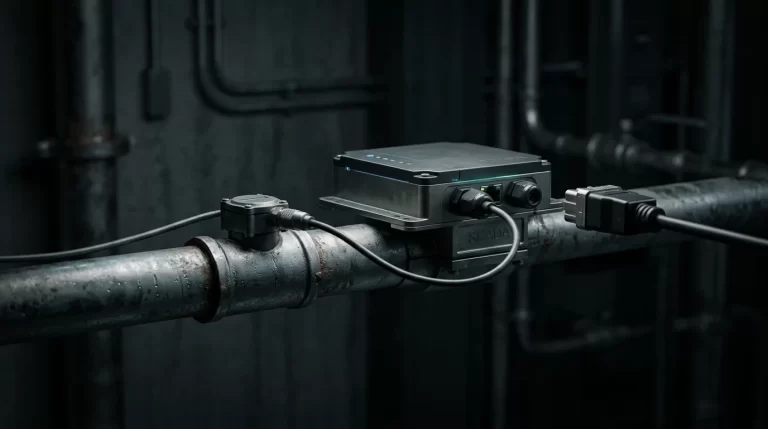
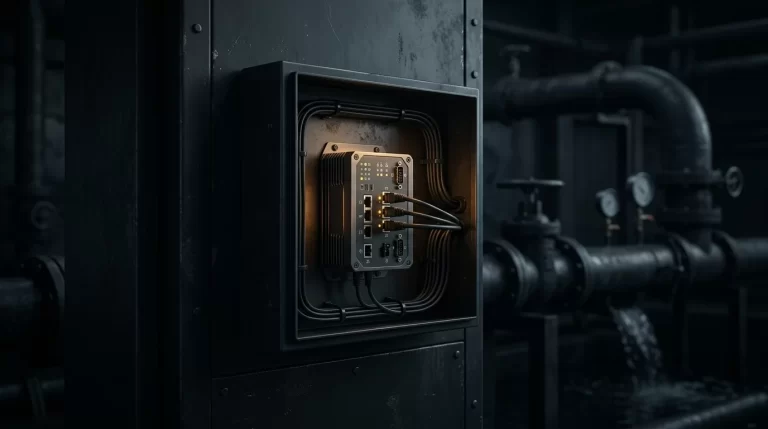
Deploying Edge AI in remote industrial environments—such as offshore platforms, uncrewed substation facilities, and desert pipeline block valve stations—introduces a paradigm shift for Senior SCADA Engineers. While the benefits of localized machine learning inference (e.g., predictive maintenance, computer vision for leak detection, and autonomous control) are immense, the physical realities of the Operational Technology (OT) edge are unforgiving. Standard IT hardware degrades rapidly under extreme thermal cycling, vibration, and inconsistent power quality. To achieve five-nines (99.999%) reliability, engineers must pivot from reactive maintenance to engineering deterministic lifecycles for their Edge AI hardware.
Defining Deterministic Lifecycles for Edge Hardware
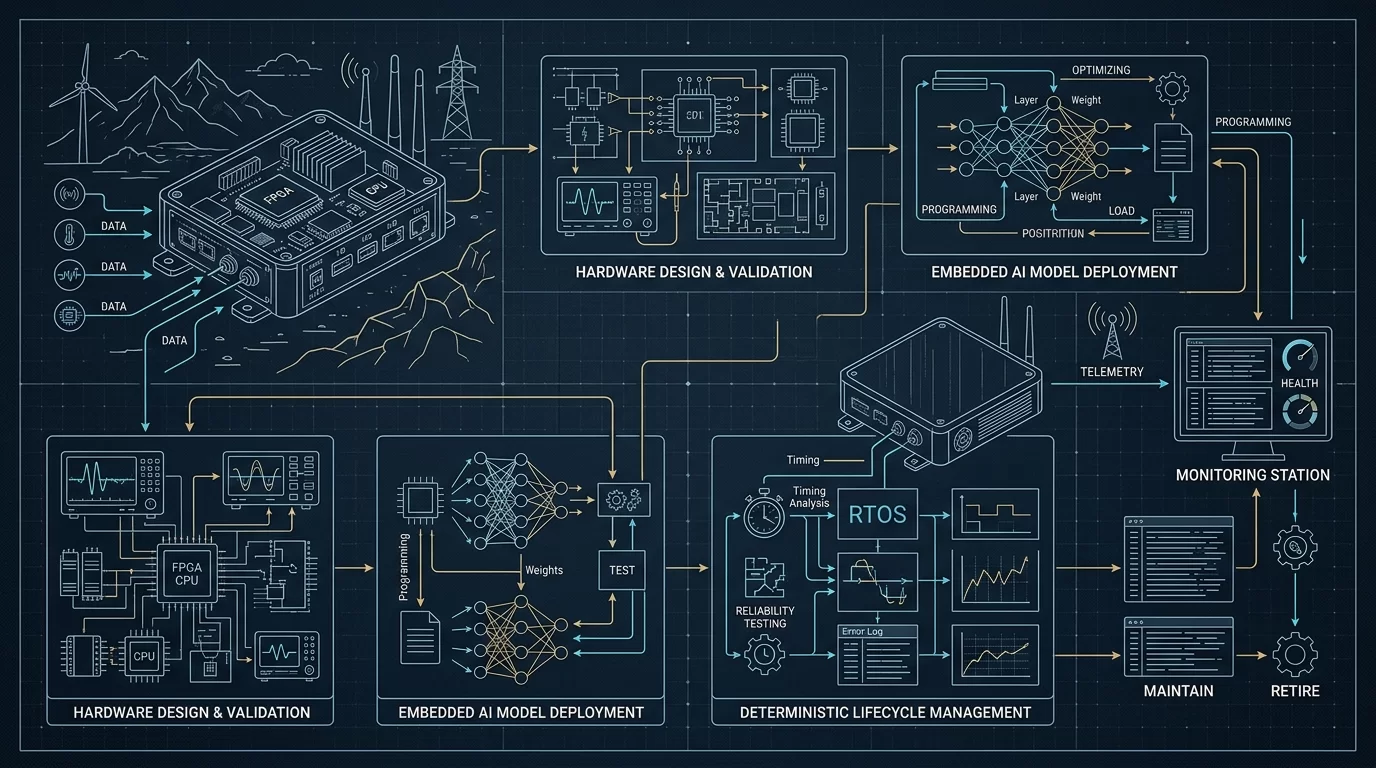
A deterministic lifecycle means that the hardware’s degradation curve, Mean Time Between Failures (MTBF), and end-of-life (EOL) are mathematically predictable and actively monitored. This contrasts sharply with the legacy “run-to-failure” model, which relies on costly emergency truck rolls. By measuring specific physical telemetry—such as NVMe/eMMC terabytes written (TBW), CPU/GPU thermal throttling events, and ECC memory error correction rates—SCADA architects can predict exact failure horizons.
For a broader perspective on integrating these autonomous edge nodes into your overall control logic, refer to our comprehensive guide on Architecting Deterministic AI and Autonomous Control Loops for Next-Gen SCADA Environments in 2026.
Core Degradation Vectors in Industrial Edge AI
- Thermal Cycling: Constant expansion and contraction of BGA (Ball Grid Array) solder joints lead to micro-fractures. Industrial edge devices must rely on passive cooling, making thermal mass and heat dissipation crucial.
- Storage Wear Leveling: High-frequency AI logging and localized time-series database writes rapidly exhaust the TBW limits of industrial flash storage. AI models frequently checkpoint data, which can destroy standard eMMC storage in months.
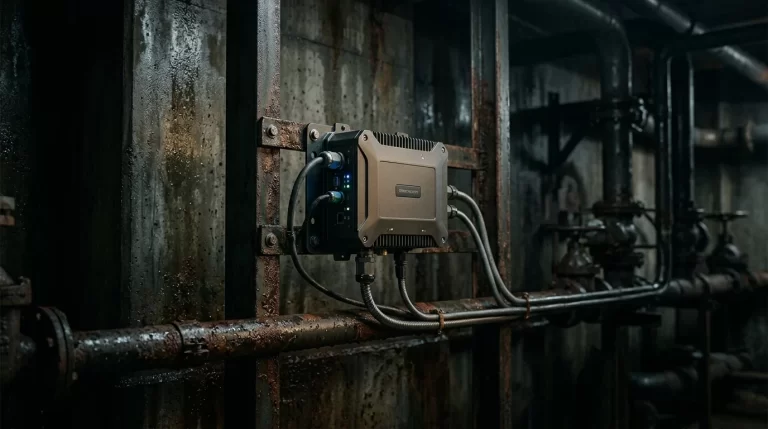
- Vibration & Shock: Continuous low-frequency vibrations from pumps and compressors degrade mechanical connections and induce piezoelectric noise in oscillators, requiring conformal coating and M12 industrial connectors.
Edge AI Hardware Architecture Comparison
Selecting the right silicon is the foundational step in engineering a deterministic lifecycle. The hardware must support industrial temperature ranges natively, without active cooling (fans are a primary point of failure). Below is a comparative analysis of leading Edge AI architectures suitable for remote SCADA integration.
| Architecture / Module | AI Performance | TDP (Watts) | Operating Temp Range | MTBF (Hours) | ECC Memory Support |
|---|---|---|---|---|---|
| NVIDIA Jetson AGX Orin Industrial | 248 TOPS | 15W – 75W | -40°C to 85°C | > 100,000 | Yes (Inline) |
| Intel Core i7-1185GRE (Tiger Lake) | ~71 TOPS (OpenVINO) | 12W – 28W | -40°C to 85°C | > 120,000 | Yes (In-Band) |
| NXP i.MX 8M Plus | 2.3 TOPS | < 5W | -40°C to 105°C | > 150,000 | Yes (Inline) |
| Hailo-8 Edge AI Processor | 26 TOPS | 2.5W | -40°C to 85°C | > 200,000 | No |
Implementing Hardware Health Telemetry via MQTT Sparkplug B
To enforce a deterministic lifecycle, the edge device must continuously report its hardware health metrics back to the central SCADA system. MQTT with the Sparkplug B specification is the ideal transport layer for this, providing stateful awareness and standardized payload structures via its Edge of Network (EoN) node architecture.
The following Python script demonstrates how an edge device can poll its own critical hardware degradation metrics (CPU temperature, NVMe wear level via nvme-cli, and memory usage) and format them for SCADA ingestion. This data can then be consumed by platforms like Ignition or VTScada to trigger predictive replacement work orders.
import subprocess
import json
import psutil
import time

def get_nvme_wear_level(device_path="/dev/nvme0n1"):
    """
    Executes nvme-cli to extract the exact percentage of NVMe lifecycle used.
    Requires root/sudo privileges on the edge device.
    """
    try:
        result = subprocess.run(
            ["nvme", "smart-log", device_path, "-o", "json"],
            capture_output=True, text=True, check=True
        )
        data = json.loads(result.stdout)
        # 'percent_used' indicates the deterministic wear level
        return data.get("percent_used", 0)
    except Exception as e:
        return -1

def get_thermal_metrics():
    """
    Retrieves CPU thermal metrics to monitor for thermal throttling events.
    """
    temps = psutil.sensors_temperatures()
    if 'coretemp' in temps:
        return temps['coretemp'][0].current
    return -1

def generate_sparkplug_payload():
    """
    Generates a mock Sparkplug B payload containing deterministic lifecycle metrics.
    """
    wear_level = get_nvme_wear_level()
    cpu_temp = get_thermal_metrics()
    ram_usage = psutil.virtual_memory().percent

    payload = {
        "timestamp": int(time.time() * 1000),
        "metrics": [
            {"name": "Hardware/Storage/NVMe_Percent_Used", "type": "Int32", "value": wear_level},
            {"name": "Hardware/Thermal/CPU_Temperature_C", "type": "Float", "value": cpu_temp},
            {"name": "Hardware/Memory/RAM_Usage_Percent", "type": "Float", "value": ram_usage}
        ]
    }
    return json.dumps(payload, indent=4)

if __name__ == "__main__":
    # In a production environment, this payload would be published via an MQTT client
    # using the Sparkplug B protobuf specification.
    print("Publishing Lifecycle Telemetry to SCADA...")
    print(generate_sparkplug_payload())
Zero-Trust and Telemetry Security
Exposing granular hardware telemetry from remote edge nodes introduces potential attack vectors. If a malicious actor intercepts or spoofs hardware health data, they could trigger unnecessary maintenance dispatches, causing operational chaos, or mask actual hardware failures during a coordinated physical attack. It is imperative that all MQTT payloads are encrypted via TLS 1.2/1.3 and authenticated using X.509 certificates.
Ensure your telemetry pipelines adhere to strict security protocols, as detailed in our Step-by-Step: Implementing Zero-Trust Architecture for Secure IT/OT Bridging in Municipal Utilities.
Case Study: Remote Pipeline Valve Analytics
Consider a major European midstream operator deploying computer vision at remote block valve stations to detect fugitive emissions and unauthorized intrusions. The initial deployment utilized commercial-grade AI accelerators, resulting in a 40% failure rate within the first 18 months due to severe winter temperature drops and summer thermal loading inside the NEMA 4X enclosures.
By re-architecting the system using NVIDIA Jetson AGX Orin Industrial modules and implementing the deterministic lifecycle telemetry outlined above, the operator achieved several key milestones:
- Predictive Replacements: NVMe wear leveling telemetry accurately predicted storage failure horizons 90 days in advance. The SCADA system automatically generated work orders, allowing for scheduled replacements during routine maintenance windows rather than emergency call-outs.
- Dynamic Thermal Throttling: By integrating the edge node’s thermal telemetry directly into the local PLC logic, the system could temporarily disable non-critical AI inference models (like secondary perimeter monitoring) during peak solar loading hours, effectively extending the MTBF of the silicon.
- Zero Unplanned Downtime: The transition from reactive to deterministic lifecycle management resulted in zero unplanned edge AI hardware failures over a subsequent 36-month period.
Conclusion
Engineering deterministic lifecycles for Edge AI hardware is not merely a hardware procurement exercise; it is a fundamental architectural requirement for modern, resilient SCADA environments. By selecting industrial-grade silicon, aggressively monitoring degradation vectors via protocols like MQTT Sparkplug B, and integrating hardware health into the broader OT control strategy, Senior SCADA Engineers can unlock the immense power of edge inference without compromising the ironclad reliability expected in critical infrastructure deployments. The shift from reactive guessing to mathematical determinism is the hallmark of next-generation industrial Automation.