Engineering Guide: Deploying C# Based AI Bots for Real-Time SCADA Anomaly Detection in Municipal Water Infrastructure


Optimize municipal water safety with C# AI bots for SCADA anomaly detection. Learn to implement ML.NET solutions that meet AWWA and IEC 62443 standards.
- Introduction: The Shift to Proactive water Management
- The Engineering Challenge: Legacy Infrastructure vs. Modern Threats
- Why C# and ML.NET for water Infrastructure?
- Technical Implementation: The Spike Detection Bot
- Comparative Analysis: Traditional Alarms vs. AI Bots
- Deployment Strategy and Cyber-Physical Security
- Key Steps for Field Deployment:
- Conclusion: Future-Proofing Municipal water
Introduction: The Shift to Proactive water Management
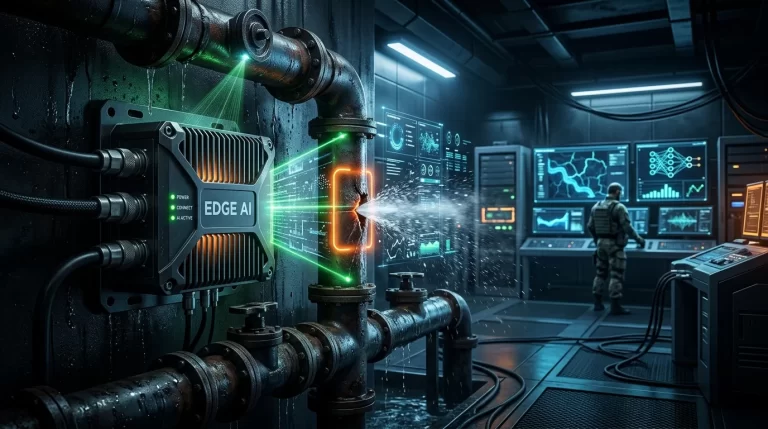
In the modern landscape of municipal utility management, the transition from reactive maintenance to proactive, data-driven operations is no longer a luxury—it is a regulatory and operational necessity. Municipal water infrastructure is currently facing a perfect storm of aging physical assets, increasing cyber threats, and more stringent environmental mandates. Traditional Supervisory Control and Data Acquisition (SCADA) systems, while robust for control, often lack the nuanced analytical capabilities required to identify subtle anomalies before they escalate into catastrophic failures. This guide explores the engineering methodology for deploying C#-based AI bots designed to sit adjacent to SCADA environments, providing real-time anomaly detection for pressure transients, flow irregularities, and chemical dosing imbalances.
The Engineering Challenge: Legacy Infrastructure vs. Modern Threats
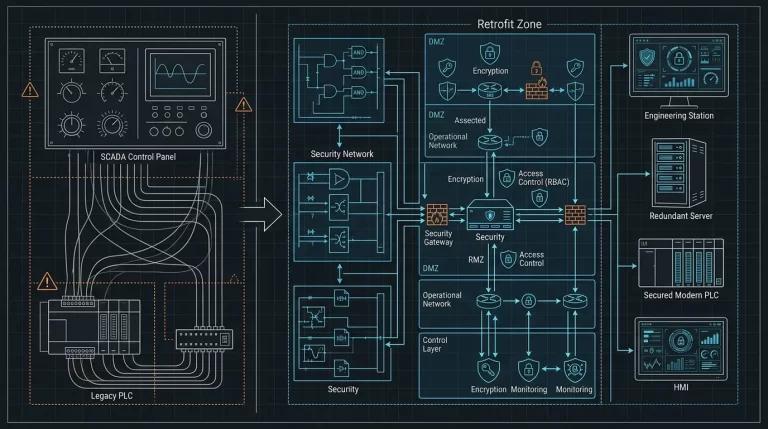
Field Automation engineers working within the public sector must navigate a complex web of legacy hardware and modern security requirements. Most municipal systems rely on a heterogeneous mix of PLCs (Programmable Logic Controllers) from various eras. Integrating artificial intelligence into this environment requires a middleware layer that is both high-performance and highly compatible. This is where the .NET ecosystem and C# provide a distinct advantage. By leveraging the cross-platform capabilities of .NET 6/8, engineers can deploy lightweight “bots” or worker services directly at the edge or within a centralized data center.
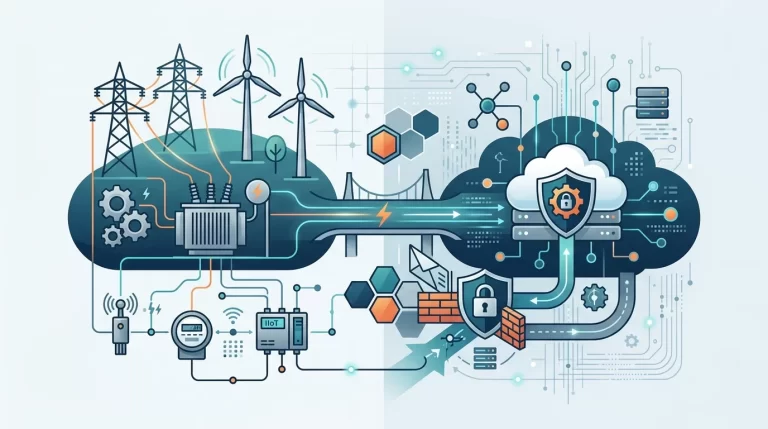
Furthermore, any deployment must adhere to strict North American standards. The AWWA J100 (Risk and Resilience Management) and EPA Risk and Resilience Assessments (RRA) demand that utilities implement measures to mitigate both physical and cyber risks. From a cybersecurity perspective, the deployment must align with IEC 62443, ensuring that the AI bot does not introduce new vulnerabilities into the Control System (CS) zone.
Why C# and ML.NET for water Infrastructure?
While Python is often the go-to for data science, C# is the language of industrial Automation. Most SCADA drivers, OPC-UA servers, and industrial middleware are natively optimized for the Windows and .NET environments. Using ML.NET, Microsoft’s open-source machine learning framework, engineers can build, train, and deploy custom models without leaving the C# ecosystem. This eliminates the “impedance mismatch” between data science teams and Automation engineers, allowing for faster deployment cycles and easier long-term maintenance by existing IT/OT staff.
Technical Implementation: The Spike Detection Bot
One of the most critical use cases in water distribution is the detection of pressure transients (water hammer), which can lead to main breaks. A C# worker service can subscribe to an OPC-UA tag representing line pressure and pass the stream through a Time-Series Anomaly Detection model. Below is a practical example of how to configure a spike detection transform using ML.NET.
using Microsoft.ML;
using Microsoft.ML.TimeSeries;

// Initialize the ML Context for the water Infrastructure Bot
var mlContext = new MLContext();

// Define the data structure for pressure readings
var dataView = mlContext.Data.LoadFromEnumerable(pressureReadings);

// Configure the Spike Detection Algorithm
// Confidence: 95%, P-Value History: 10 readings, Training Window: 100 readings
var estimator = mlContext.Transforms.DetectSpikeBySsa(
    outputColumnName: "Prediction",
    inputColumnName: "PressurePSI",
    confidence: 95.0d,
    pvalueHistoryLength: 10,
    trainingWindowSize: 100,
    seasonalityWindowSize: 10);

// Transform the data and identify anomalies
var transformedData = estimator.Fit(dataView).Transform(dataView);
var predictions = mlContext.Data.CreateEnumerable<PressurePrediction>(transformedData, reuseRowObject: false);
Comparative Analysis: Traditional Alarms vs. AI Bots
To understand the value proposition for municipal stakeholders, we must compare the AI-driven approach against traditional SCADA alarming. Traditional systems rely on static high/low thresholds, which often result in “alarm fatigue” due to frequent false positives during peak demand periods.
| Feature | Traditional SCADA Alarming | C# AI-Driven Bots |
|---|---|---|
| Logic Basis | Static Thresholds (e.g., > 80 PSI) | Dynamic Pattern Recognition |
| Context Awareness | None (Ignores time of day/season) | High (Learns diurnal demand cycles) |
| False Positive Rate | High (Triggered by normal transients) | Low (Filters out expected noise) |
| Maintenance | Manual setpoint adjustments | Self-correcting via continuous training |
| Data Integration | Isolated to PLC tags | Fuses SCADA, Weather, and GIS data |
Deployment Strategy and Cyber-Physical Security
Deploying an AI bot requires a structured approach to ensure it does not interfere with primary control logic. The recommended architecture is the “Observer Pattern”: the AI bot resides in a Demilitarized Zone (DMZ) or a secure Level 3 Operations branch of the Purdue Model. It receives data via a read-only OPC-UA subscription or a mirrored MQTT stream. This ensures that even if the bot’s environment is compromised, the primary PLC control logic remains isolated, satisfying NERC CIP concepts of electronic security perimeters.
Key Steps for Field Deployment:
- Data Normalization: Use C# to clean raw sensor data, handling missing packets or out-of-range values common in radio-telemetry links.
- Model Training: Train the model on at least 30 days of historical data to capture the baseline “heartbeat” of the municipal network.
- Alert Orchestration: Integrate the bot with enterprise messaging systems (e.g., Microsoft Teams or Twilio) to notify field crews of anomalies before they reach the critical SCADA alarm state.
Conclusion: Future-Proofing Municipal water
The integration of C# AI bots into municipal water infrastructure represents a significant leap forward in operational efficiency. By moving beyond simple threshold monitoring and embracing machine learning, water managers can extend the life of their assets, reduce emergency repair costs, and ensure compliance with evolving federal safety standards. As we move toward the era of water 4.0, the ability to deploy scalable, secure, and intelligent code at the edge will be the defining characteristic of a resilient utility.