Engineering Guide: Deploying Ruggedized Edge AI for Real-Time Leak Detection in Extreme Water Infrastructure Environments

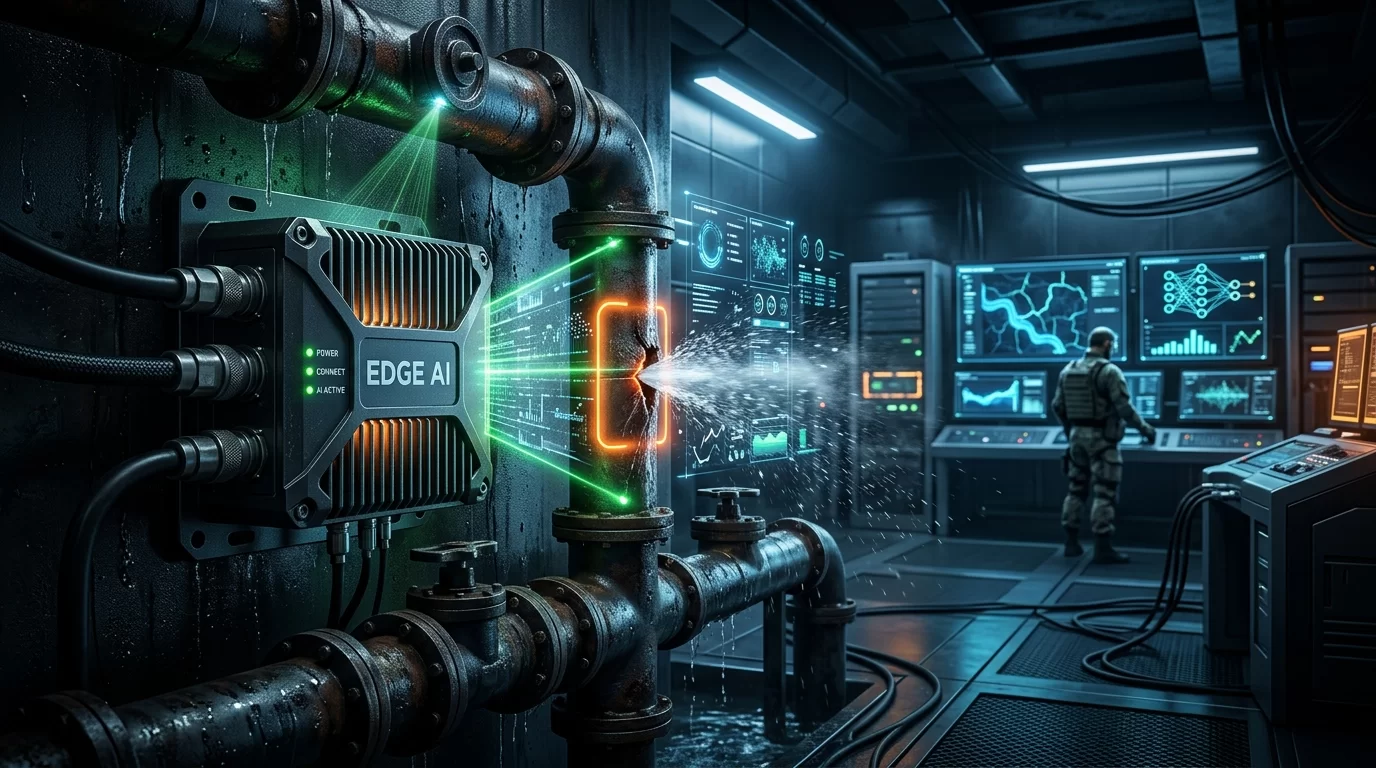
Master ruggedized Edge AI for real-time leak detection. This engineering guide explores deployment strategies and technical pitfalls in water infrastructure.
Introduction: The Shift from Reactive to Proactive Infrastructure
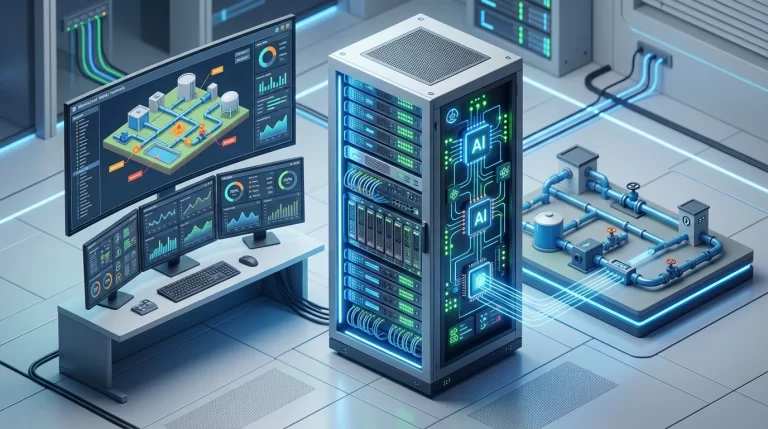
For decades, water infrastructure managers have relied on SCADA systems that provide a high-level overview but lack the granular, real-time intelligence required to prevent catastrophic pipe failures. In extreme environments—ranging from sub-zero temperatures in northern municipal lines to high-humidity, high-salinity coastal pumping stations—traditional monitoring fails. The emergence of Ruggedized Edge AI marks a fundamental shift. By moving the compute power from a centralized cloud to the physical asset, we eliminate the latency and bandwidth bottlenecks that previously rendered real-time leak detection impossible.
- Master ruggedized Edge AI for real-time leak detection. This engineering guide explores deployment strategies and technical pitfalls in water infrastructure.
- Introduction: The Shift from Reactive to Proactive Infrastructure
- The Architectural Shift: Cloud-Centric vs. Ruggedized Edge AI
- Engineering Standards and Compliance
- Technical Implementation: Anomaly Detection at the Edge
- Hidden Technical Pitfalls in Field Automation
- Conclusion: The Future of water Management
The Architectural Shift: Cloud-Centric vs. Ruggedized Edge AI
Deploying AI in the field is not merely about moving code; it is about managing the physics of the environment. A common mistake in B2B procurement is treating an industrial PC like a standard server. In water infrastructure, the “Edge” is often a NEMA 4X enclosure exposed to direct sunlight, vibration from heavy-duty pumps, and intermittent power cycles. The following table highlights the critical performance metrics that differentiate these approaches.
| Metric | Cloud-Centric Analysis | Ruggedized Edge AI (On-Prem) |
|---|---|---|
| Response Latency | 500ms to >2s (Network dependent) | <10ms (Real-time local trigger) |
| Data Backhaul Cost | High (Continuous raw audio/pressure streaming) | Low (Metadata and alerts only) |
| Operational Resilience | Fails during WAN outages | Autonomous operation; failsafe local logic |
| Security Profile | Broader attack surface (Continuous data transit) | Reduced surface (In-situ processing) |
| Thermal Tolerance | Requires HVAC (Standard Data Center) | -40°C to +85°C (Passive Cooling) |
Engineering Standards and Compliance
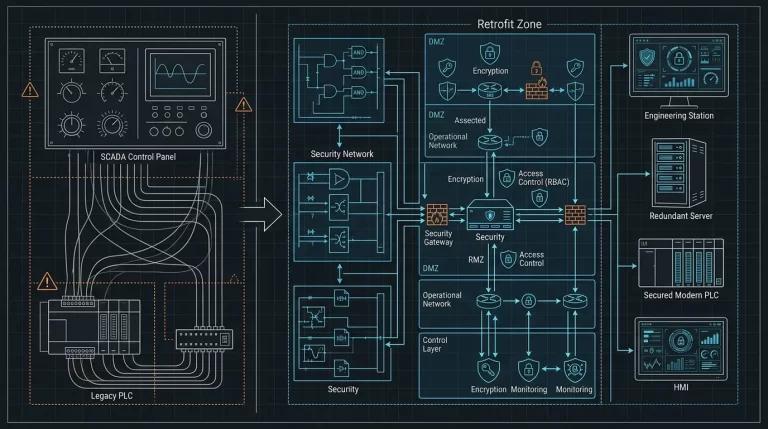
In the North American sector, any deployment must align with the American water Works Association (AWWA) standards, specifically G430 for security practices. Furthermore, because these devices often interface with critical control systems, compliance with NERC CIP (Critical Infrastructure Protection) and EPA cybersecurity frameworks is non-negotiable. Field engineers must ensure that Edge AI gateways utilize TPM 2.0 (Trusted Platform Module) chips to secure cryptographic keys, ensuring that the device itself does not become an entry point for lateral movement within the utility network.
For more information on industrial communication standards, refer to the IEEE website for the latest in Ethernet/IP and TSN (Time-Sensitive Networking) protocols.
Technical Implementation: Anomaly Detection at the Edge
The primary technical challenge in leak detection is distinguishing between hydraulic transients (normal pump operations) and genuine leak signatures (high-frequency acoustic noise). A robust Edge AI deployment uses a combination of Fast Fourier Transforms (FFT) and localized Machine Learning models (like Random Forests or lightweight CNNs) to process acoustic sensor data. Below is a conceptual Python configuration snippet for an Edge gateway running a Dockerized inference engine to monitor acoustic thresholds.
# Edge AI Configuration: Acoustic Leak Detection Logic
import numpy as np
from edge_sdk import SensorInterface, AlertManager

def process_acoustic_stream(sensor_id):
    # Initialize sensor interface (e.g., 4-20mA or Modbus TCP)
    sensor = SensorInterface(id=sensor_id)

    while True:
        # Buffer 100ms of high-frequency acoustic data
        data_buffer = sensor.read_high_frequency_samples(1024)

        # Perform FFT to isolate leak frequencies (typically 500Hz - 2kHz)
        fft_result = np.abs(np.fft.fft(data_buffer))
        leak_band_energy = np.sum(fft_result[50:200])

        # Dynamic Thresholding based on baseline pump noise
        if leak_band_energy > sensor.get_dynamic_threshold():
            AlertManager.trigger_local_shutdown_sequence()
            AlertManager.send_metadata_to_scada(leak_band_energy)

# Implementation following AWWA J100 Risk Assessment standards
process_acoustic_stream("PUMP_STATION_04_INLET")
Hidden Technical Pitfalls in Field Automation
While the software logic may work in a lab, field deployment introduces variables that often lead to project failure. As a field engineer, you must account for:
- Thermal Throttling: Many AI accelerators (like VPUs or GPUs) throttle performance when internal temperatures exceed 70°C. In unconditioned cabinets, heat soak is inevitable. Always specify fanless, conduction-cooled chassis with wide-temp industrial SSDs.
- Signal Noise: Electromagnetic Interference (EMI) from Variable Frequency Drives (VFDs) can corrupt analog sensor signals. Use shielded twisted-pair cabling and ensure proper grounding to avoid “ghost” leak detections.
- Power Quality: water infrastructure sites often suffer from voltage sags. Implementing an industrial-grade UPS or a DC-DC converter with a wide input range (9-36V) is critical for preventing file system corruption on the Edge device.
To deepen your understanding of ruggedized hardware requirements, consult the AWWA Digital Library for technical manuals on Automation and control systems.
Conclusion: The Future of water Management
Deploying Ruggedized Edge AI is not just a hardware upgrade; it is a strategic move toward infrastructure resilience. By addressing the physical realities of the environment—vibration, temperature, and connectivity—managers can reduce non-revenue water (NRW) losses by up to 30%. The key is selecting hardware that meets MIL-STD-810G for shock and vibration while maintaining the computational overhead to run sophisticated neural networks locally. In the race to modernize our aging water systems, the Edge is where the battle against water scarcity will be won.