The Ultimate Guide: Architecting Edge AI for Municipal Water Leak Detection: A Data-Driven Deployment Strategy for Distributed SCADA Networks

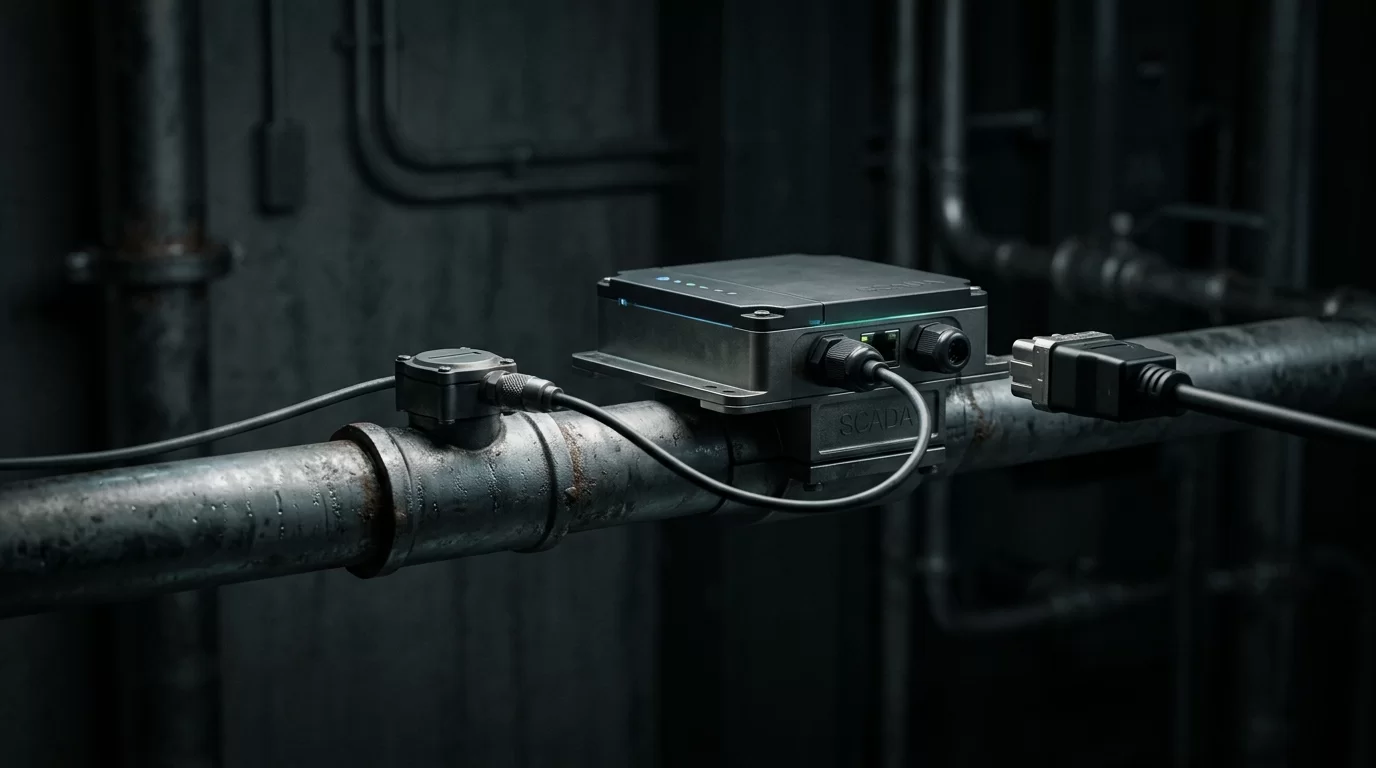
Discover how to architect, deploy, and troubleshoot Edge AI for municipal water leak detection within distributed SCADA networks to drastically reduce non-revenue water (NRW). This step-by-step technical guide provides data-driven deployment strategies and telemetry optimization techniques for Senior SCADA Engineers.
- The Shift from Cloud to Edge in Municipal water Networks
- Step 1: Diagnosing Telemetry Bottlenecks and Selecting Edge Hardware
- Step 2: Deploying the Local AI Anomaly Detection Pipeline
- Step 3: Troubleshooting Protocol Translation and Edge-to-Center Handshakes
- Step 4: Mitigating False Positives through Spatial Context
- Step 5: Securing the Distributed Edge AI Deployment
- Conclusion
The Shift from Cloud to Edge in Municipal water Networks
For decades, municipal water infrastructure in North America and Europe has relied on centralized SCADA architectures polling Remote Terminal Units (RTUs) via DNP3 or Modbus over low-bandwidth radio networks. While sufficient for basic tank level and pump status monitoring, this architecture collapses when tasked with high-frequency acoustic and transient pressure data required for real-time leak detection. Transmitting 256Hz acoustic data to a centralized cloud or on-premise historian consumes massive bandwidth, incurs high cellular costs, and introduces latency that renders automated valve shut-offs ineffective. The architectural solution is pushing the Machine Learning (ML) inference directly to the edge.
Step 1: Diagnosing Telemetry Bottlenecks and Selecting Edge Hardware
Symptom: High network latency, dropped packets, and historian buffer overflows when attempting to stream raw acoustic sensor data from remote District Metered Areas (DMAs).
Diagnostic: Legacy 900MHz radios and 3G/4G cellular modems are asymmetric and optimized for low-payload, low-frequency polling (e.g., 1-minute intervals). Streaming high-fidelity time-series data saturates the uplink.
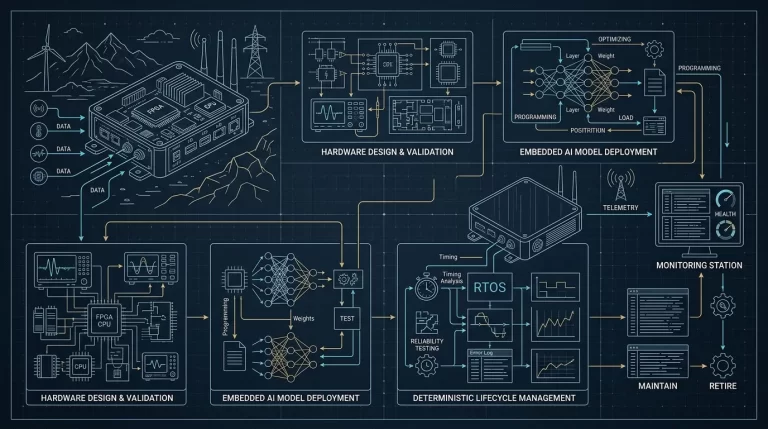
Resolution: Deploy an Edge AI gateway at the DMA site. The gateway ingests raw data locally, runs the inference model, and transmits only the anomaly confidence score and metadata back to the SCADA Master. Review the following data-driven hardware comparison to select the appropriate edge compute node for your specific RTU enclosure constraints.
| Hardware Platform | AI Compute (TOPS) | Power Draw (Watts) | Native OT Protocols | Ideal SCADA Application |
|---|---|---|---|---|
| NVIDIA Jetson Orin Nano | 40 TOPS | 7W – 15W | Requires Gateway Software | Complex acoustic FFT analysis & multi-sensor fusion |
| Siemens IPC227E (Nanobox) | CPU Dependent (Intel) | ~15W | OPC UA, PROFINET, Modbus | Brownfield integration with existing Siemens PLCs |
| Raspberry Pi CM4 (Industrial) | N/A (Relies on CPU/Coral) | < 5W | Requires Gateway Software | Solar-powered, highly distributed micro-DMAs |
| Moxa UC-8200 Series | Dual-core ARM Cortex | < 10W | Modbus, DNP3, MQTT | Harsh environments (-40 to 85°C), legacy protocol translation |
Step 2: Deploying the Local AI Anomaly Detection Pipeline
Symptom: Edge hardware is installed, but the SCADA system is still receiving raw data, or the local Python script is crashing due to memory leaks during continuous data ingestion.
Diagnostic: The edge software architecture lacks a robust, memory-managed pipeline for time-series data buffering and inference. Local scripts must utilize efficient libraries and clear memory buffers after each inference cycle.
Resolution: Implement a lightweight anomaly detection algorithm, such as an Isolation Forest, tailored for edge deployment. The pipeline should read local Modbus/I2C registers, perform the inference, and publish the result via MQTT Sparkplug B to ensure stateful integration with the SCADA historian.
import time
import numpy as np
import paho.mqtt.client as mqtt
from sklearn.ensemble import IsolationForest
from pymodbus.client import ModbusTcpClient

# Configuration
SCADA_MQTT_BROKER = "10.0.0.50"
EDGE_DEVICE_ID = "DMA_Zone_4_Acoustic"
MODBUS_IP = "127.0.0.1"

# Initialize Modbus Client (Reading local high-frequency sensor)
plc_client = ModbusTcpClient(MODBUS_IP)

# Pre-trained Isolation Forest Model (Loaded from local storage)
# Assumes model was trained centrally and pushed to the edge
model = IsolationForest(n_estimators=100, contamination=0.01)
model.fit(np.random.rand(1000, 1)) # Placeholder for actual training data

def publish_to_scada(anomaly_score, pressure_val):
    client = mqtt.Client(EDGE_DEVICE_ID)
    client.connect(SCADA_MQTT_BROKER, 1883, 60)
    payload = f'{{"device": "{EDGE_DEVICE_ID}", "anomaly_score": {anomaly_score}, "pressure": {pressure_val}}}'
    client.publish("spBv1.0/WaterGrid/DDATA/Node1/Acoustic", payload)
    client.disconnect()

def edge_inference_loop():
    buffer = []
    while True:
        try:
            # Read 10 registers (simulating 100ms high-freq acoustic/pressure data)
            result = plc_client.read_holding_registers(0, 10, unit=1)
            if not result.isError():
                buffer.extend(result.registers)

                # Run inference every 100 samples
                if len(buffer) >= 100:
                    data_array = np.array(buffer).reshape(-1, 1)
                    # Predict returns -1 for anomaly, 1 for normal
                    predictions = model.predict(data_array)
                    anomaly_rate = np.mean(predictions == -1)

                    # If anomaly rate exceeds threshold, alert SCADA
                    if anomaly_rate > 0.15:
                        avg_pressure = np.mean(buffer)
                        publish_to_scada(anomaly_rate, avg_pressure)

                    buffer.clear() # Prevent memory leaks
            time.sleep(0.1)
        except Exception as e:
            print(f"Edge Pipeline Error: {e}")
            time.sleep(5)

if __name__ == "__main__":
    edge_inference_loop()
Step 3: Troubleshooting Protocol Translation and Edge-to-Center Handshakes
Symptom: The Edge AI node successfully detects a leak, but the central SCADA HMI (e.g., Ignition, GeoSCADA, or VTScada) displays stale data or fails to trigger the critical alarm.
Diagnostic: Standard MQTT lacks state awareness. If the edge device drops off the cellular network, the SCADA broker retains the last known MQTT payload, potentially masking a critical failure of the leak detection node itself.
Resolution: Architect the communication using MQTT Sparkplug B. Sparkplug B enforces a strict state management protocol using Node Birth (NBIRTH) and Node Death (NDEATH) certificates. Configure your SCADA MQTT Engine to monitor the NDEATH payload. If the edge AI node loses connectivity, the SCADA system immediately flags the AI confidence tags with a “Bad/Comm Failure” quality code, alerting the operator that the DMA is currently unmonitored for leaks.
Step 4: Mitigating False Positives through Spatial Context
Symptom: The Edge AI model generates excessive false positive leak alarms during early morning hours or specific days of the week, leading to alarm fatigue among SCADA operators.
Diagnostic: Acoustic and transient pressure anomalies are not exclusive to pipe bursts. Legitimate operational events, such as automated hydrant flushing, sudden industrial consumption, or downstream pump startups, create identical local acoustic signatures.
Resolution: Edge AI lacks macro-network context. To resolve this, the central SCADA system must correlate the edge anomaly score with geographic and operational data. By operationalizing GIS spatial analytics for predictive maintenance in municipal water grids, you can script a validation logic layer in your SCADA historian. If Edge Node A reports an anomaly, the SCADA system queries the GIS database for scheduled maintenance or checks adjacent DMA flow meters. If a scheduled hydrant flush is active within a 2-mile radius, the SCADA system automatically suppresses the critical alarm and logs it as an “Expected Transient Event.”
Step 5: Securing the Distributed Edge AI Deployment
Symptom: Unauthorized access attempts detected on the MQTT broker, or edge devices are found running unauthorized background processes.
Diagnostic: Expanding the SCADA footprint with Linux-based Edge AI nodes exponentially increases the OT attack surface. Default credentials, unencrypted MQTT payloads (Port 1883), and open SSH ports are primary vectors for lateral movement into the critical infrastructure network.
Resolution: Moving compute to the edge requires a fundamental shift in OT security postures. Implement mutual TLS (mTLS) for all MQTT communications, ensuring both the edge node and the SCADA broker cryptographically verify each other before exchanging payloads. Disable SSH over the WAN interface and enforce read-only file systems on the edge nodes to prevent malware persistence. For a comprehensive framework on locking down these remote endpoints, refer to our guide on architecting zero-trust security for legacy water SCADA networks.
Conclusion
Architecting Edge AI for municipal water leak detection is not merely a software deployment; it is a fundamental redesign of SCADA telemetry. By processing high-frequency acoustic data at the edge, utilizing MQTT Sparkplug B for stateful communication, and validating inferences against GIS spatial data, Senior SCADA Engineers can build highly resilient, low-latency leak detection networks. This data-driven approach minimizes bandwidth costs, eliminates operator alarm fatigue, and provides the real-time operational intelligence required to aggressively combat non-revenue water losses.