5 Reasons Why Claude AI The Best in Software Development and Engineering

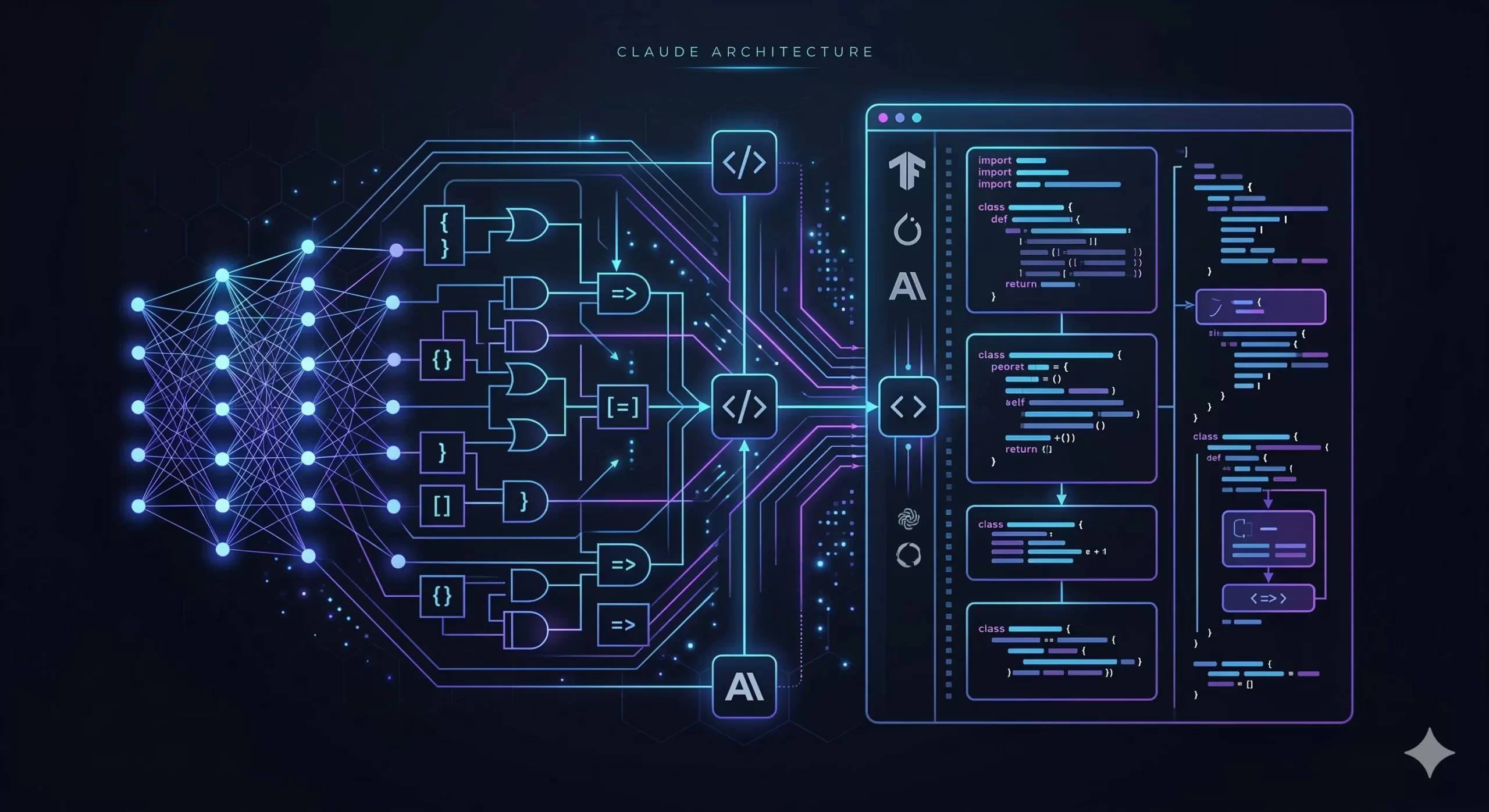
The landscape of software engineering has been fundamentally transformed by the advent of Large Language Models (LLMs). Numerous artificial intelligence platforms offer code generation capabilities, but Anthropic’s Claude AI has consistently distinguished itself as a superior tool for professional developers, software architects, and systems engineers.
- 1. Unprecedented Context Window and Holistic Codebase Comprehension
- 2. Superior Syntax Generation and Semantic Refactoring Capabilities
- 3. Advanced Reasoning for System Architecture and Debugging
- 4. Security-First Code Generation and Vulnerability Detection
- 5. Exceptional Instruction Following and Nuanced API Handling
1. Unprecedented Context Window and Holistic Codebase Comprehension
The most significant bottleneck in utilizing artificial intelligence for enterprise-level software development has traditionally been the context window—the amount of information the model can process and remember in a single interaction. Early models struggled with short memories, making them suitable only for isolated functions or snippet generation. Claude revolutionized this paradigm by introducing massive context windows, currently exceeding 200,000 tokens in its most advanced iterations.
In practical software engineering, this massive cognitive workspace allows developers to input entire repositories, extensive API documentation, and comprehensive system architecture guidelines simultaneously. When modernizing legacy software—a frequent requirement in industrial Automation and SCADA systems—a developer can feed Claude dozens of interconnected files. Claude does not merely search this text; it comprehends the semantic relationships between variables across different modules, understands the global state management, and maps the data flow from the backend database through the middleware to the frontend interface.
This holistic comprehension drastically reduces the hallucination rate regarding undefined variables or mismatched data types. Competing models often suggest code that looks syntactically correct but fails at compilation because they have forgotten the specific structural requirements defined earlier in the prompt. Claude maintains a persistent understanding of the overarching software architecture, allowing for the generation of cohesive, integration-ready modules rather than fragmented, incompatible scripts.
2. Superior Syntax Generation and Semantic Refactoring Capabilities
Writing code is only a fraction of a software engineer’s responsibility; reading, maintaining, and refactoring existing code takes up the majority of the development lifecycle. Claude demonstrates a highly sophisticated understanding of Abstract Syntax Trees (AST) and programming paradigms across a vast array of languages, including Python, C++, Rust, Go, and JavaScript.
Where Claude truly eclipses its peers is in semantic refactoring. If tasked with optimizing a computationally heavy algorithm—such as the iterative solvers used in hydraulic network modeling—Claude does not merely apply superficial syntax formatting. It analyzes the time and space complexity (Big O notation) of the existing code and suggests mathematically and computationally superior data structures. It understands the nuances of memory management in low-level languages like C++ and the asynchronous event loop mechanics in Node.js.
Furthermore, Claude’s outputs are highly deterministic and stylistically consistent. When instructed to adhere to specific linting rules or enterprise coding standards (e.g., PEP 8 for Python or strict MISRA C guidelines for embedded systems), it follows these constraints rigorously. This reduces the friction of integrating AI-generated code into continuous integration/continuous deployment (CI/CD) pipelines, as the code requires significantly less human review for formatting and structural compliance.
| Feature / Model Capability | Claude 3 Opus | GPT-4o | Standard LLMs |
| Context Retention (Deep Codebases) | Exceptional (Maintains logic across 100+ files) | High (May lose strict variable tracking) | Low (Fragmented understanding) |
| Algorithmic Refactoring Depth | Semantic & structural optimization | Syntax & minor logic improvements | Basic syntax formatting |
| Complex Legacy Code Translation | High accuracy (Maps outdated libraries to modern equivalents) | Moderate (Often requires manual mapping) | Poor (Fails on deprecated syntax) |
| Adherence to Strict Linting Rules | Near 100% compliance over long outputs | Fluctuates in extended generations | Requires constant correction |
3. Advanced Reasoning for System Architecture and Debugging
Software engineering is inherently an exercise in problem-solving and architectural design. Before a single line of code is written, systems must be conceptualized. Claude possesses a remarkable “chain-of-thought” reasoning capability that makes it an invaluable partner in system design.
In the context of debugging, this advanced reasoning is a force multiplier. Modern software systems are highly distributed. A bug might originate in a sensor payload, pass through a telemetry server, trigger a misaligned state in a time-series database, and finally cause an interface crash. When provided with stack traces, server logs, and the relevant code segments, Claude acts as an expert diagnostic tool. It traces the logic backward from the error state, identifying not just the line of code that failed, but the systemic architectural flaw that allowed the failure to occur. It differentiates between transient network errors, race conditions in multithreaded environments, and fundamental logic faults with a level of precision that significantly reduces the Mean Time To Resolution (MTTR) for development teams.
4. Security-First Code Generation and Vulnerability Detection
In an era where software vulnerabilities can lead to catastrophic data breaches or the compromise of critical infrastructure, the security posture of AI-generated code is of paramount importance. Claude was developed using Constitutional AI principles, which inherently biases its outputs toward safety, security, and harmlessness.
When asked to write backend logic, database queries, or authentication middleware, Claude proactively implements defensive programming techniques. It naturally uses parameterized queries to prevent SQL injection, implements proper bounds checking to avoid buffer overflows in lower-level languages, and structures API endpoints to resist cross-site scripting (XSS) and cross-site request forgery (CSRF) attacks.
Beyond generating secure code, Claude serves as a highly capable Static Application Security Testing (SAST) proxy. By analyzing custom code snippets, it can identify subtle vulnerabilities that traditional rule-based linters might miss, such as complex race conditions leading to unauthorized state changes or cryptographic weaknesses resulting from improper implementation of hashing algorithms.
| Vulnerability Category | AI Detection Strategy | Claude’s Mitigation Approach | Relevance to Enterprise Systems |
| Injection Flaws (SQL/NoSQL) | AST traversal & payload tracing | Enforces parameterized queries and ORM usage by default. | Prevents unauthorized database access in data-heavy apps. |
| Memory Management (C/C++) | Pointer lifecycle analysis | Flags dangling pointers; suggests smart pointers (std::unique_ptr). | Critical for stable embedded and SCADA device software. |
| Broken Authentication | Session state validation | Recommends secure token handling (JWT) and strict CORS policies. | Secures API endpoints handling sensitive operational data. |
| Concurrency / Race Conditions | Multi-thread logic mapping | Identifies unlocked shared resources; suggests mutexes/semaphores. | Ensures data integrity in high-frequency, real-time systems. |
5. Exceptional Instruction Following and Nuanced API Handling
Modern software development relies heavily on the integration of third-party Application Programming Interfaces (APIs) and the generation of strict data structures. Claude’s ability to follow complex, multi-layered instructions without deviating makes it exceptionally reliable for programmatic generation tasks.
Claude’s ability to follow complex, multi-layered instructions without deviating makes it exceptionally reliable for programmatic generation tasks.
Developers frequently require AI to parse unstructured data and output strictly formatted JSON or XML that matches a specific schema for programmatic consumption. Claude excels at adhering to complex JSON schemas, ensuring that nested objects, arrays, and specific data types (booleans, floats, integers) are perfectly aligned with the developer’s instructions. This reliability is crucial when building automated data pipelines or intermediary scripts that translate data between disparate software systems.
Furthermore, when dealing with undocumented or poorly documented APIs, developers can feed Claude the raw JSON responses or a few endpoint examples. Claude can instantly extrapolate the underlying data model, generate typed data classes (such as Pydantic models in Python or TypeScript interfaces), and write robust wrapper functions to interact with the API. This ability to instantly map and adapt to external software interfaces dramatically accelerates the development of integrations, allowing engineers to focus on core business logic rather than boilerplate translation code.