Best SCADA Software Solutions for Modern Water Management and Industrial Automation: A Comprehensive Review of Top-Tier Tools

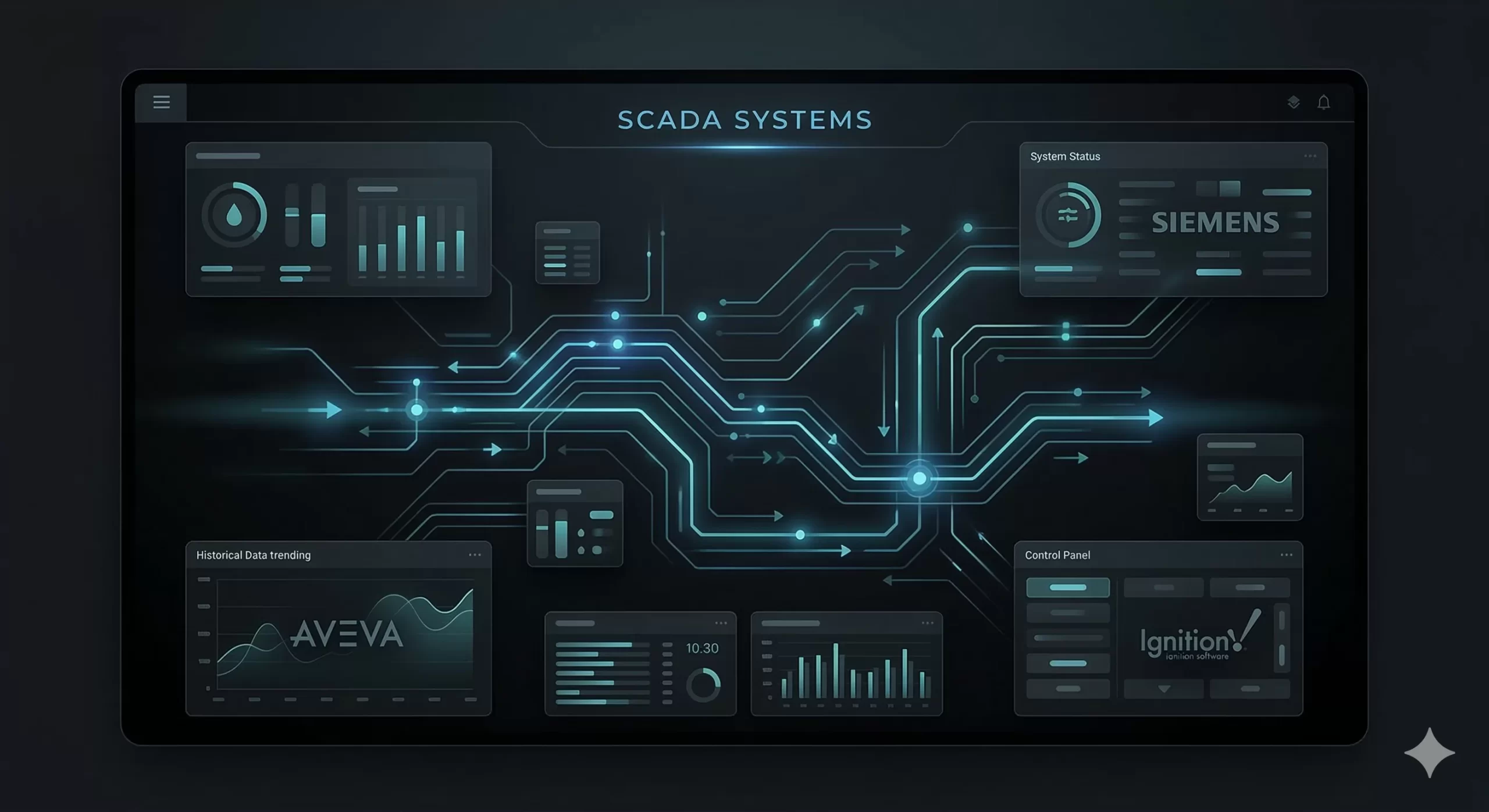
The integration of Supervisory Control and Data Acquisition (SCADA) systems has revolutionized the way water utilities and industrial facilities monitor, manage, and optimize their critical infrastructure. As the global demand for operational efficiency and data-driven decision-making grows, the selection of a robust SCADA tool becomes a cornerstone for any digital transformation strategy. This article explores the leading SCADA solutions in the market, focusing on their capabilities in Hydraulic Modeling, real-time data acquisition, and seamless integration with water management systems.
- The Evolution of SCADA in water Infrastructure
- Top-Tier SCADA Software Comparison
- 1. Ignition by Inductive Automation
- 2. AVEVA System Platform
- 3. Siemens SIMATIC WinCC
- Technical Performance and System Requirements
- Hydraulic Modeling and SCADA Synchronization
- Security and Future Trends
- Conclusion
The Evolution of SCADA in water Infrastructure
Historically, SCADA systems were isolated silos of operational technology (OT). However, the rise of the Industrial Internet of Things (IIoT) and advanced cloud computing has transitioned these tools into highly interconnected platforms. For organizations like Hidrosoft.net, which specialize in the intersection of water management and artificial intelligence, the choice of SCADA software is dictated by its ability to handle high-frequency data, provide predictive analytics, and maintain rigorous cybersecurity standards.
Modern SCADA tools are no longer just about visual representations of pumps and valves; they are the engines behind sophisticated hydraulic models. By feeding real-time pressure, flow, and level data into models, engineers can perform “what-if” scenarios, detect leakages with millimeter precision, and optimize energy consumption across vast distribution networks.
Top-Tier SCADA Software Comparison
The market is populated by several industry giants and innovative challengers. Below is a comparative analysis of the most prominent tools used in large-scale water management and industrial Automation.
| Feature | Ignition by Inductive Automation | AVEVA (formerly Wonderware) | Siemens SIMATIC WinCC | GE Digital iFIX |
| Architecture | Web-based, Cross-platform | Hybrid Cloud/On-premise | Modular, TIA Portal Integrated | Centralized/Distributed |
| Licensing | Unlimited tags/clients | Per-tag/Client-based | Tiered by tag count | Per-node/Point-based |
| Connectivity | OPC UA, MQTT, SQL | Proprietary Drivers, OPC | Profinet, S7 Protocol | iFIX Drivers, OPC UA |
| Ideal For | Rapid deployment & IIoT | Complex Enterprise Systems | Large-scale Manufacturing | Critical water Infrastructure |
1. Ignition by Inductive Automation
Ignition has disrupted the SCADA market by introducing a purely web-based, cross-platform architecture. Its “Unlimited” licensing model is particularly attractive for water management projects where thousands of sensors may be deployed across a geographic region.
-
Key Strength: Its native support for MQTT makes it an ideal choice for IIoT applications, allowing for efficient communication even over low-bandwidth cellular networks often found in remote pumping stations.
-
AI Integration: Ignition’s open database architecture allows AI-driven scripts to pull historical data easily, facilitating the creation of predictive maintenance models for hydraulic machinery.
2. AVEVA System Platform
Formerly known as Wonderware, AVEVA provides a highly scalable “Model-Driven” SCADA approach. This is particularly useful in water treatment plants where standardizing objects (like a standardized pump or filter bed) across multiple sites is required.
-
Historian Capabilities: AVEVA’s historian is renowned for its ability to store massive volumes of time-series data without performance degradation.
-
Visualization: Its OMI (Operations Management Interface) provides a responsive environment that adapts to mobile devices, control room video walls, and tablets simultaneously.
3. Siemens SIMATIC WinCC
As a part of the Totally Integrated Automation (TIA) Portal, WinCC is the go-to solution for facilities heavily utilizing Siemens hardware. It offers deep integration with S7-1500 controllers, which are common in high-precision Hydraulic Modeling setups.
Technical Performance and System Requirements
Choosing a SCADA tool also requires an understanding of the underlying infrastructure requirements. High-performance Hydraulic Modeling requires low-latency data ingestion and high-speed processing.
| Specification | Entry-Level Setup | Enterprise-Grade Setup |
| Data Update Rate | 1 second | < 100 milliseconds |
| Database Support | MySQL / SQLite | MS SQL Server / PostgreSQL / Oracle |
| Redundancy | Cold Standby | Hot-Swappable Failover Clusters |
| Modeling Sync | Manual Import | Real-Time API Bi-directional Link |
Hydraulic Modeling and SCADA Synchronization
The true power of modern SCADA tools is realized when they are coupled with Hydraulic Modeling software. Tools like Epanet or WaterGems can now be interfaced with SCADA databases to provide a “Digital Twin” of the water network. This synergy allows operators to visualize not just what is happening, but what will happen if a specific main breaks or a pump fails.
Hidrosoft.net emphasizes that the integration of AI within these SCADA frameworks allows for “Self-Healing” networks. By analyzing historical flow patterns and current SCADA telemetry, AI algorithms can automatically adjust VFD (Variable Frequency Drive) settings to maintain optimal pressure, thereby reducing the risk of pipe bursts and minimizing non-revenue water (NRW) losses.
Security and Future Trends
As SCADA systems move closer to the cloud, cybersecurity remains the primary concern. The latest versions of iFIX and WinCC have incorporated robust encryption and multi-factor authentication. Furthermore, the shift toward “Open SCADA” protocols ensures that utilities are no longer locked into a single vendor’s ecosystem.
Future trends indicate a move toward Edge SCADA, where initial data processing and AI inference occur at the local PLC or Gateway level rather than in a central server. This reduces latency and ensures that critical hydraulic safety protocols remain active even if the primary network connection is lost.
Conclusion
Selecting the right SCADA tool is a strategic decision that impacts the operational lifespan of water infrastructure for decades. Whether it is the flexibility of Ignition, the enterprise scale of AVEVA, or the hardware synergy of Siemens, the focus must remain on data integrity, ease of integration with hydraulic models, and readiness for AI-driven optimization.




[…] the ever-evolving landscape of industrial Automation, Supervisory Control and Data Acquisition (SCADA) systems play a pivotal role in managing and […]